
Landmark study looks far ahead

Curiosity, perseverance and citizen science laid the groundwork for the biggest ever study on pasture persistence in New Zealand, and farmers themselves remain central to the project.
The recent launch of the seven year, $17 million Resilient Pastures programme has been a decade in the making. It could end up re-writing the rules for successful grassland farming for many producers.
Even before the first paddock trials go in the ground, however, it’s already seen as a landmark by those who have observed first-hand the effect of declining pasture persistence and productivity in the upper North Island.
They believe farmers in many parts of NZ will potentially benefit from this study. We agree, which is why we are involved; Barenbrug seed from here, and offshore, will be used for the trials.
The big picture
Resilient Pastures focuses on red meat, wool and dairy farms in Northland, Waikato and Bay of Plenty. It has four goals.
The first is to define current vs future climate conditions and variability so farmers know what they will have to adapt to, and when. The second is to evaluate pasture species, mixes and management for better resilience and persistence.
Goal three is to design profitable, sustainable farming systems based on these resilient pastures, and goal four is to support adoption of these solutions, through decision support tools and farmer collaboration.
The Ministry for Primary Industries has contributed about half the funding; co-funders are programme leader DairyNZ; Beef + Lamb New Zealand; TR Ellett Agricultural Research Trust; Barenbrug; Fonterra; Northland’s Hine Rangi Trust and the Northland Dairy Development Trust.
Eyes on autumn
Trials of existing pasture species like ryegrass, cocksfoot, fescue and clovers will start on farms throughout the three regions in autumn 2026, and be monitored for at least five years years.
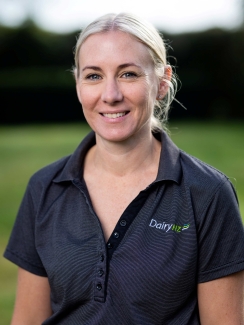
But as DairyNZ senior scientist and project lead Elena Minnee points out, there’s much to do first.
A key item on her to-do list? Testing the planned approach to these commercial paddock trials, to understand what data needs to be collected, and how much time and commitment might be required of farmers who participate in the project.
A go-early pilot has already started on three farms with this in mind.
Equally important is finding out from farmers themselves in Northland, Waikato and Bay of Plenty what pastures and management practices currently work for them in terms of persistence and resilience, and what things they want the researchers to study.
Further afield
Tropical grasses and legumes will be explored in the project. This is where we come in, because we have access through the global Barenbrug group to key species used for pastoral farming in hotter climates, like Brazil and northern Australia.
We don’t know what species will fit, but think Brachiaria, Rhodes grass and tropical legumes like Desmanthus.
But that’s not the only reason we’re backing the new project, explains NZ research and development manager Courtney Inch.
“Persistence is becoming more variable with traditional temperate species in northern NZ. We’re serious about this issue; we want to help with solutions for both now, and in the future, because we’re here for the long-term.
“As plant breeders, we need to keep looking for improvement, and that means identifying climate resilient pasture species and management practices.”
Elena Minnee says farmers and researchers will evaluate a range of tropical species, to identify the most promising species go into small plot cutting trials for initial evaluation, planned for spring 2026, before they are tested on-farm.
Where it all started
The genesis of Resilient Pastures goes back through the four-year Northland Diversified Forages project, which finished in 2020, to local farmers’ own experiences and observations during the previous decade.
Dargaville’s Allister McCahon started looking beyond perennial ryegrass and clover around 2010, searching for productive pastures that would last longer than three years, because home grown feed is such a crucial component of farm profitability.
As one of many in the region who have adapted their forage systems to cope with increasing climatic variability, he’s elated to see Resilient Pastures tackling what will become a common cause for most – if not all – parts of the country in years to come.
“All landowners are going to be impacted by the need to adapt to climate change. Northland’s experience will inform what happens in the rest of the country, but this is not just a Northland story. Resilient Pastures is a multi-sector response to the uncertain challenges many rural communities will face.”
Evidence = confidence
After years of experimentation, monitoring and fine-tuning, he has settled on an evidence-based pasture strategy with results that have given him great confidence not only in his farm productivity, but also the value of staying curious, and trying new things.
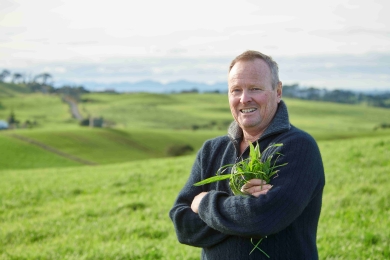
Temperate grasses, herbs and legumes still drive the farm, just not in the same species and ratios they once did.
But Allister also advocates for the need to learn from, and seek new species from regions in the world where pastures thrive under conditions that may become part of the new NZ normal in future.
“We cannot rely on a single, silver bullet answer to provide the solution to this complex issue.”
And he is keen to see how tropical forages might perform in NZ.
Likewise he believes the project’s goal to work with farmers to help provide them credible information to support their decision making is a key step towards empowering farmers to devise and implement their own strategies for improved resilience.
Stay tuned
DairyNZ’s Elena Minnee says farmers were already expressing interest in being part of the project as soon as it was announced at National Fieldays.
“Between now and November, we will be looking for those who might be willing to contribute to the research plan, and some that would be willing to have paddocks on their farms established in trials.
“If you want to hear more about the project or get involved, reach out through the Resilient Pastures webpage on the DairyNZ website or through your regional managers.”
Meantime, we’re always available to talk about pasture resiliency, no matter what that looks like for you. Book your free personal Pasture Health Check today.
Book a free pasture health check
Click here to request a free on farm pasture health check with one of our local experts.