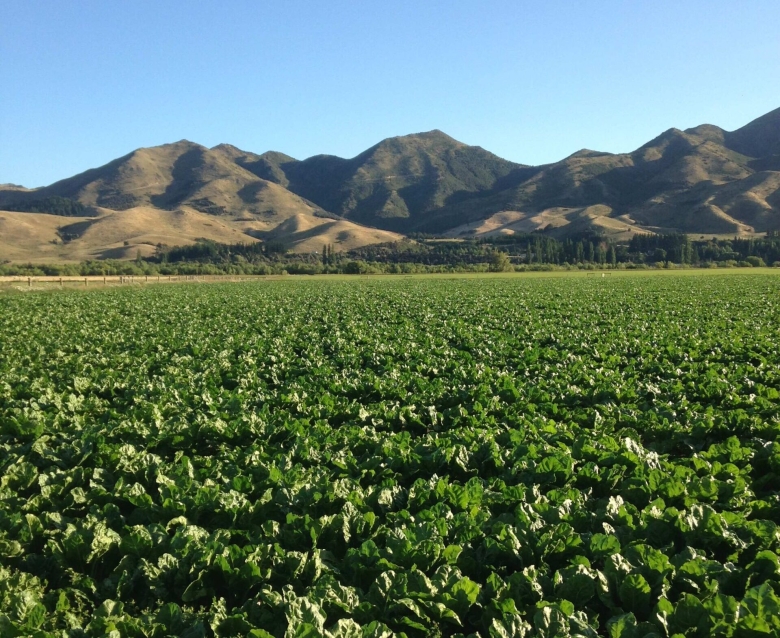
Soil fertility – Fodder beet
Fodder beet needs the right nutrients to yield well.
Soil test paddock(s) to a depth of 150 mm 6-12 months before planting. This gives you time to address pH or nutrient issues. Apply and incorporate all base fertiliser before planting.
pH
The ideal soil pH is 6.0-6.3. It can take 6 months or more for lime to act (depending on incorporation, weather, and the type of lime used), so apply this as early as possible. As a rule of thumb, 1 t/ha lime raises the pH by 0.1.
Phosphorus
Phosphorus is essential for plant establishment and overall yield. Target Olsen P level for fodder beet is 15+. Typically crops benefit from a base dressing of 25- 50 kg P/ha.
Nitrogen
Before cultivation, soil test to 150 mm deep for anaerobically mineralisable nitrogen (AMN). As a guide:
- If AMN >80 ug/g, 50 kg N/ha is required.
- If AMN <80 ug/g, up to 100 kg N/ha may be required.
Research has shown there is no yield advantage to applying more than 100 kg N/ha. Timing is important - apply 50% at sowing and 50% before canopy closure.
Potassium
Fodder beet requires soil potassium quick test levels of 5+. As a rule of thumb, if the soil test result is lower than 3, apply 100 kg K/ha. If it is 3-5, apply 50 kg K/ha.
Sulphur
If the sulphur quick test result is below 5, apply at sowing.
Magnesium
Recommended quick test soil levels are 8+. If magnesium is required apply 25-30 kg Mg/ha as a base fertiliser.
Sodium
If quick test soil values are less than 5, apply 150 kg NaCl/ha as a base fertiliser.
Boron
Boron is essential for crop development. If soil test results are less than 1 parts per million (ppm), include 1.5 kg B/ha in the starter fertiliser, e.g. granular boron (15% B) at a rate of 10 kg/ha.