
Managing new pasture
Pasture establishment takes 12 months. Good management during this time gets new plants off to a strong start and helps them persist. A pasture is not successfully established until you have a dense, well tillered sward one year after sowing.
Do’s and don’ts
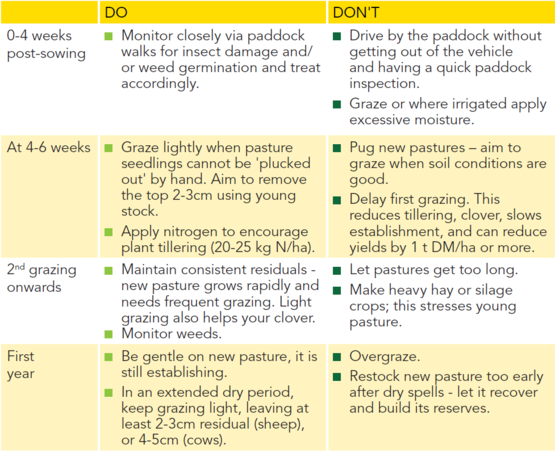
First grazing
The most critical grazing is the first ‘nip-off’ and should occur as soon as the baby grass plants do not pull out of the ground. Light grazing promotes grass tillering and growth. Early grazing also benefits slower establishing species, like clover and herbs, allowing light to reach them. Young clover plants are usually smaller, and susceptible to shading. If your seed is treated, check the grazing withhold period. For Agricote Grass, this is 42 days for sowing, and 21 days for undersowing.
Space invaders
Monitor new pastures closely for emerging weeds. They compete aggressively with young grass, clovers and herbs, reducing pasture longevity. Spray early when they are still small and easier to control (typically before or after first grazing). If you do need to spray, make sure the herbicide is safe for other sown species.
Subequent grazings
From the second grazing onwards, new pastures grow fast and need frequent grazing. Apply small amounts of nitrogen to boost growth and tillering. Keep pastures relatively short to encourage ryegrass to tiller and prevent shading of clover and herbs. Don’t let them get too long (>3500 kg DM/ha), or take a heavy silage cut in year one.
First winter & summer
Graze new pastures carefully in periods of stress. In wet winters, protect them from treading damage. Otherwise, future DM yield and persistence will be compromised. In dry periods, do not overgraze establishing pasture.