
Pasture pests
This section lists a range of insect pests, to help you identify them and their importance. Pests can cause severe damage to both foliage and roots, so good management strategies are crucial for protecting pastures.
Argentine stem weevil (Listronotus bonariensis)
Damage seen:
Oct-April
ASW is a grass pest throughout NZ. Damage can be significantly reduced at pasture establishment, using the correct seed treatment, and once established, through use of an effective endophyte.
Identification
ASW larvae destroy grass tillers by boring into the base of their stems. Populations can reach 500-1000 larvae/ m², causing serious damage.
To find larvae, look for dead or dying central leaves in tillers, that when lightly pulled come straight out of the plant, due to being eaten at the base of the stem. The base of these stems show a small hole (if larvae are still inside) or significant damage inside as in the photo.
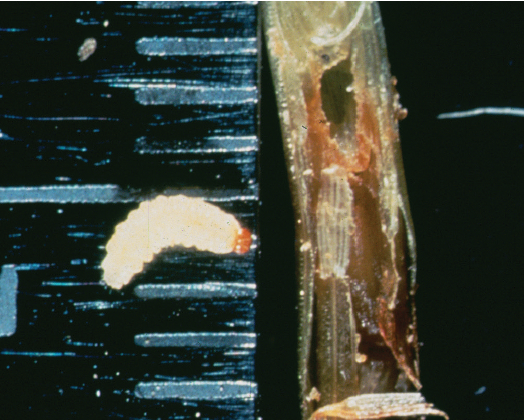
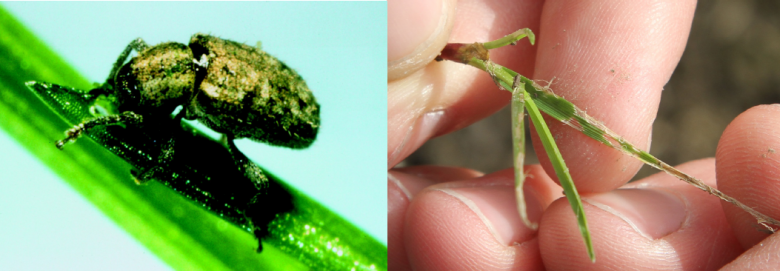
Adult weevil grow up to 3 mm long. Adult ASW windowing.
Larval damage mainly occurs from mid October to mid April. It is usually seen when pastures are growing slowly, and is often confused with drought stress.
Younger pastures seem more susceptible than older ones.
In most areas, ASW have two generations a year, one in spring and another in summer. Generally the summer generation is the most damaging, between December and March.
Adult weevil feeding is characterised by small rectangular ‘windows’ 2-3 mm long on the leaf blade (shown in photo). Adults do not affect the persistence of established pasture, but can kill grass at establishment
Prevention & management
Establishment
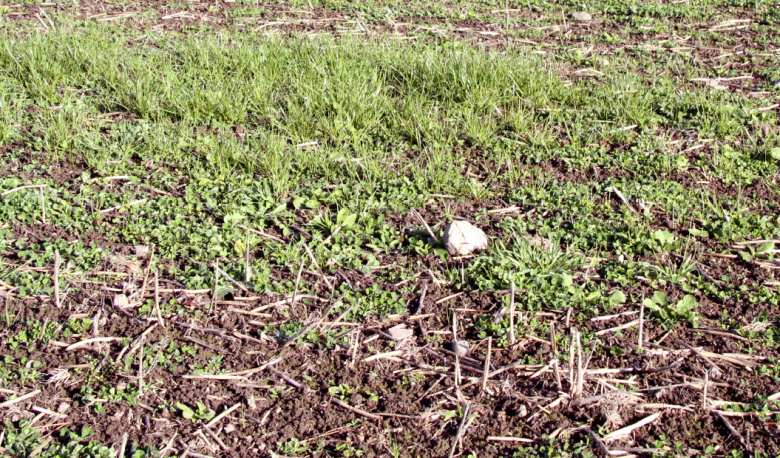
New grass can fail from adult ASW attack in late spring- autumn. This is most common in grass to grass or cereal to grass sowings with minimal tillage, or when undersowing into existing pasture, as ASW numbers can build up on the previous grass or cereal. Good cultivation practices minimise ASW numbers, however if turf or plant sods remain intact ASW may survive on these.
Adult ASW can kill grass seedlings as they first emerge, predominately in the first few weeks after sowing.
Beware of dry conditions – slow establishment means leaving plants in a vulnerable stage for longer.
Seed treatment
If sowing ryegrass where adult and larval ASW are potential problems, use a suitable seed treatment (e.g. Agricote Grass) to help protect new seedlings. Additionally, in grass to grass or cereal to grass spray- drill situations where ASW numbers can be high, add an appropriate insecticide to the final glyphosate spray before sowing to reduce the ASW population.
Endophytes AR37, NEA12, RGT18, CM142 and ryegrass Without endophyte give seedlings no protection against adult ASW. Other endophytes (NEA, NEA2, NEA4 and AR1) give some protection in newly sown pastures, but not as much as seed treatment.
Endophyte
Endophyte is an important tool for ongoing ASW control in a pasture. Once established, diploid perennial ryegrass containing NEA2, NEA4, NEA12, AR1, AR37 or RGT18 endophytes are likely to provide good ASW control in most situations.
Tetraploids versus diploids
Tetraploid ryegrass cultivars are more susceptible to ASW damage, as they are preferred by ASW, and have a lower tiller density, so they cannot withstand the same level of damage as diploids. In areas of high ASW damage (e.g. coastal Taranaki) tetraploids can be less persistent than diploid cultivars.
Biological control
A parasitoid wasp (Microtonus hyperdae) is now widespread, and helps alleviate damage caused by ASW, although recent evidence suggests its effectiveness has reduced since introduction.
Black beetle (Heteronychus arator)
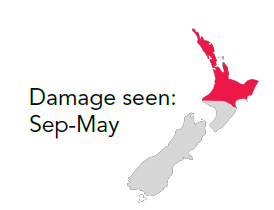
Black beetle (BB) is a pest of free draining soils in warmer regions of the North Island. Numbers vary widely from year to year, with root feeding larvae capable of causing severe pasture damage in summer. Adult BB can decimate new grass sowings in autumn, and seed treatment is essential for protection.
Identification
BB are only found in warm areas, including Northland, Waikato, Bay of Plenty, coastal Auckland, Gisborne, coastal Taranaki, Manawatu and Kapiti coast. As they live on and in the soil, they are mainly found in free draining, sandy, light ash or loam soils, and do not like heavy clays or poorly drained soils.
BB populations vary widely from year to year. They can increase rapidly when conditions are right, and numbers may stay high for several years.
Pastures damaged by summer dry conditions can become affected due to the invasion of summer grasses, a preferred feed of BB.
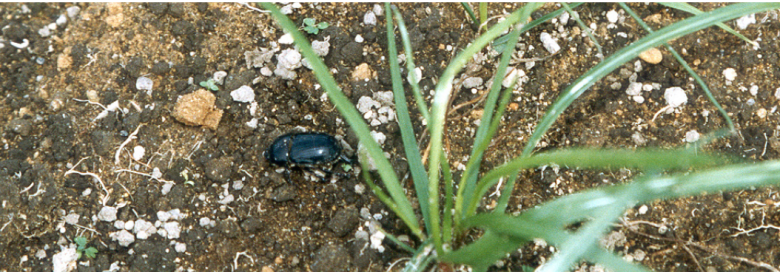
Both adult and larval BB damage pastures. Adults feed on roots or on the base of plants at soil level during autumn and spring, causing patches of yellowing tillers that easily pull out. They can destroy new pasture sown in autumn, especially if spray- drilled or undersown, as the insect population is not controlled in the absence of cultivation.
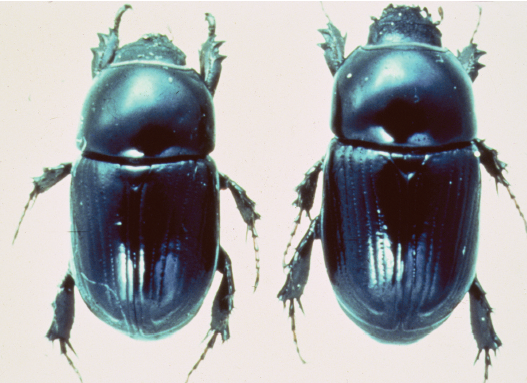
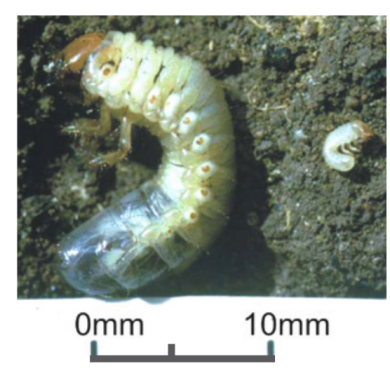
Larvae feed on plant roots December-March and cause patchy ryegrass death. Weakened plants are susceptible to pulling during animal grazing. Damage is most apparent in dry summers when larval numbers are above 40/ m². Larval damage can be severe in newly sown pastures.
Life cycle
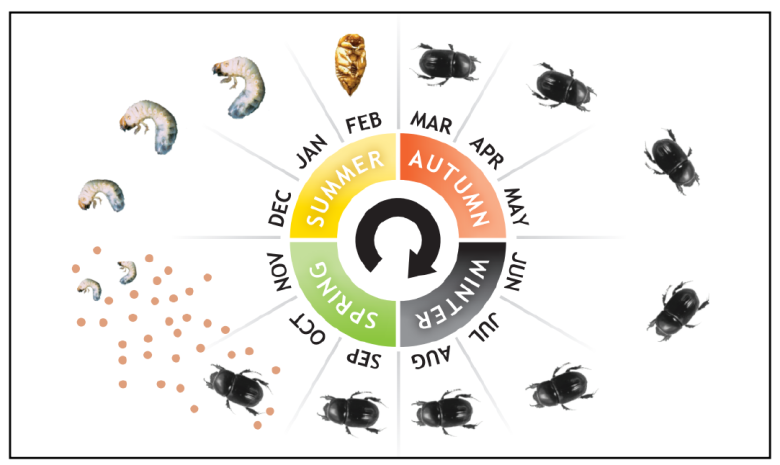
Establishing pasture
When renewing pasture in an area with a high risk of BB:
- Consider break crops. BB doesn’t like brassicas, chicory or maize. Cropping prior to pasture renewal will reduce populations.
- Before sowing, eliminate any grass weeds to remove this food source for BB.
- Monitor BB populations from early February. You need to know pest numbers before finalising sowing plans.
- Cultivate if beetle populations are high. Cultivation significantly reduces numbers of adult beetles and larvae. The threshold is >15-20/m² of adult and larvae.
- Sow ryegrass with the right endophyte. NEA, NEA2, NEA4, NEA12 and AR37 are the most successful novel endophytes for control of adult BB. AR1 is not recommended.
- Always sow treated seed, such as Agricote Grass. This is essential to protect establishing grass plants. Endophyte provides minimal protection for ryegrass seedlings during establishment.
- Use lime to improve soil pH. On-farm trials by Agresearch have shown applying lime in spring to raise the soil pH to 6 resulted in up to 40% less BB larvae than control treatments.
Biological control
NEA, NEA2, NEA4, NEA12 or AR37 endophyte all give good control of BB by reducing adult feeding, egg laying, and hence larval damage. They do not directly affect larvae. AR1 endophyte does not provide effective BB control and should not be used where BB is a risk.
However, no endophyte gives complete resistance, and all ryegrasses may still be damaged in problem areas in summer dry conditions.
Other grasses, such as paspalum and poa annua, are a good food source for BB adults. At present no insecticides are available to control BB.
Black field cricket (Teleogryllus commodus)
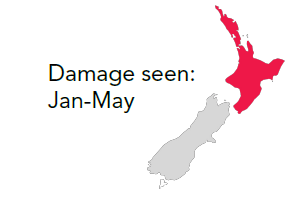
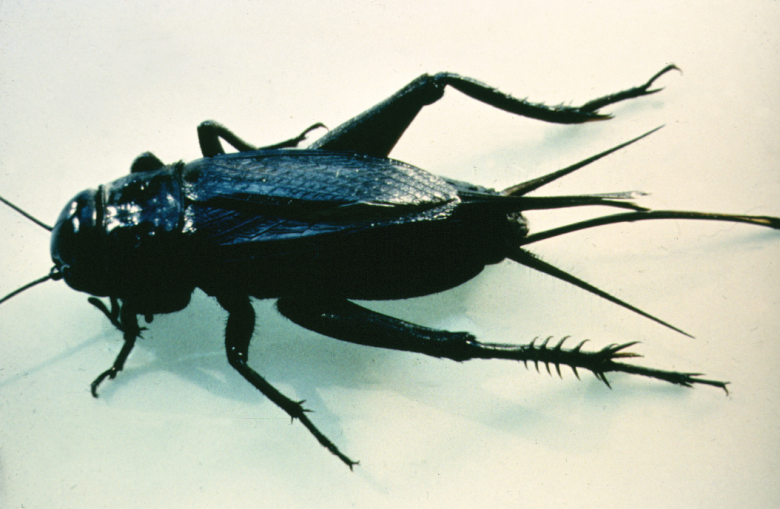
Black field cricket is a serious pasture pest in Northland, Auckland, parts of Waikato, Bay of Plenty, Hawke’s Bay and Manawatu. It especially likes clay soils prone to cracking in dry summers.
Identification
The late nymphal stages and adults cause the most pasture damage. The young nymphs look like miniature adults but have a white band across the body which distinguishes them from native crickets.
Crickets feed above ground at night and take refuge in cracks in the soil during the day. Crickets feed outwards from the cracks, defoliating and killing pasture grasses. They are selective feeders, preferring grasses but also eating legumes, weeds and newly sown seed.
Pastures are more susceptible to damage in their first year.
On heavier soils, damage shows clearly as bare patches associated with soil cracks. Damage on lighter soils is often harder to see, as seeds and seedlings eaten by crickets are often covered by pasture, but if the bare earth is revealed when the pasture is pushed away by hand, cricket feeding may be seen.
If crickets are suspected but not visible, a weak solution of household detergent in water can be used to flush them from cracks in the soil.
Prevention & management
The potential for severe long term pasture damage makes early detection very important. Crickets can quickly defoliate and kill older grasses with high grazing pressure on the crown.
Populations over 10/m² are considered economically damaging. At 20/m² they can consume up to 16 kg DM/ha/day, and populations can reach 100 to 150/m².
Crickets can be effectively controlled using maldison- grain baits, applied at a rate relative to the population base.
Clover flea (Sminthurus viridis)
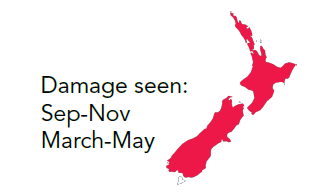
Clover flea (CF) is present throughout NZ and is a particular threat to white clover and lucerne.
Identification
CF, also known as the lucerne flea or springtail, can easily be seen with the naked eye. It grows up to 3 mm long and is greenish yellow with irregular dark patches.
Adult females lay very small cream-coloured eggs loose on the soil surface. The eggs hatch into small nymphs which resemble adults and develop through 5-7 stages to adulthood.
Clover damage appears as leaf flecking, giving a measles-like effect. Under severe attack, leaves appear white, as all green tissue is removed from the leaf leaving a transparent skeleton.
Fouling of clover by the fleas tends to reduce palatability to livestock.
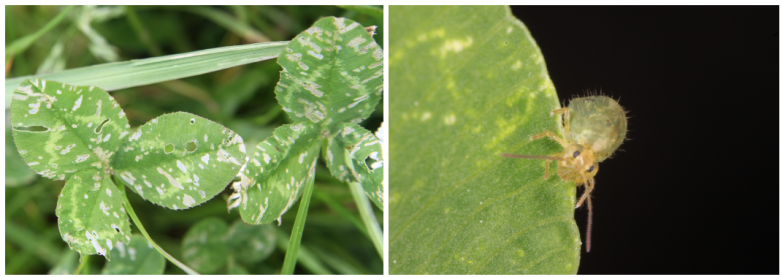
Clover flea damage pattern showing on the green tissue of a clover leaf (left). An adult clover flea (Right) Photo taken by Trevor James - AgResearch
Prevention & management
CF can be successfully controlled using insecticides, by combining a low rate of insecticide to kill adults and an insect growth regulator to eliminate juveniles once they hatch from eggs.
Keep your clover healthy through good pasture management. This helps it tolerate a low level of CF.
Clover root weevil (Sitona lepidus)
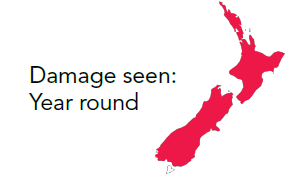
Clover root weevil (CRW) is present throughout New Zealand. Feeding exclusively on clover, it has a major impact on clover production and nitrogen fixation. A parasitoid wasp has been released in most areas as a biocontrol agent and has established well except in Northland.
Identification
Adult CRW are brownish grey, up to 5 mm long with a typical weevil shape. Their damage is characterised by U shaped notches on the edges of clover leaves. As clover is adapted to defoliation, the adult weevil rarely kills clover, apart from young seedlings.
Adults can fly and actively disperse in dry conditions and when numbers are high and clover levels are low. They are present year-round, most abundant in spring and autumn. Larvae are most damaging, feeding on the clover roots, stolons and nodules. Larvae mostly live in the top 5 cm of soil. They are white legless grubs from 1-6 mm long, with a conspicuous brown head capsule.
CRW is only associated with clovers, so where clover is absent, there will be no weevil.
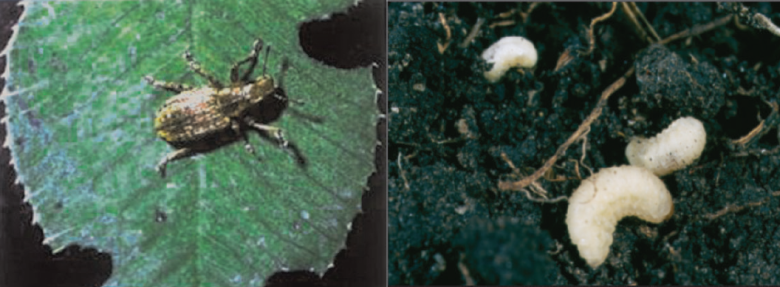
Adult CRW on a clover leaf showing typical U shaped feeding damage (left). CRW larvae cause most of the damage ( Right).
Prevention & management
Maintaining strong clover in pastures is the best way to reduce the effect of CRW. See Maximising white clover.
Where clover is severely damaged, increased use of nitrogen fertilisers may be required to compensate for reduced nitrogen fixation.
If sowing clover into a known CRW infested paddock adult weevils will probably need insecticide control before sowing. Sow white clover cultivars with high stolon density and better CRW tolerance, or red clover which is less affected by CRW. Modern white clovers (e.g. Ruru and Kotuku) have been selected under medium to high levels of CRW. Oversowing white clover seed onto pastures can help re-establish clover following severe CRW damage.
Biological control
A parasitoid wasp (Microctonus aethiopoides) has been released as a biocontrol agent and is now well established throughout most of the North Island and South Island. This wasp won’t eliminate CRW, but significantly reduces populations and larval damage.
Fall armyworm (Spodoptera frugiperda)

Fall armyworm (FA) are found in the upper and coastal North Island. They can badly damage establishing pasture, particularly with direct-drilling. Monitor for the pest and control where required.
Identification
There are three species of armyworm (Fall, Cosmopolitan and Tropical) in New Zealand. FA were first detected in New Zealand in 2022, believed to have been carried by the wind from Australia. They are a pest of maize and a range of vegetables, but will happily eat ryegrass.
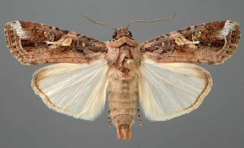
Adult FA moths have brown forewings and cream hind wings, with a wingspan of 30-40 mm. They are excellent fliers and can travel up to 500 km to spread egg laying.
Newly hatched larvae are light coloured with a darker head, but darken in colour as they grow.
Mature FA larvae are 30-36mm in length, and can vary in colour from pinkish to dark brown. A distinguishing feature is four distinctive spots in a square arrangement on their second to last segment, with spots in a trapeze shape elsewhere. In large numbers they can resemble an ‘army’, consuming everthing in their path, and can migrate to adjacent pasture.
Pupae are dark brown, 13-17mm long, and shiny.
Prevention & management
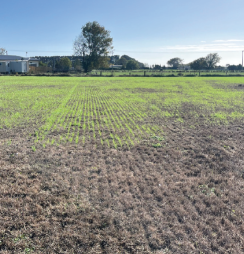
ryegrass pasture.
In pastures FA are mainly a problem during establishment, when new seedlings are very vulnerable to damage. Good cultivation practices reduce pest levels. If spray-drilling check for FA larvae, moths and feeding damage, particularly if it is a known pest in the area. Sprays are available for FA, but they are resistant to a number of insecticides, so seek specialist advice.
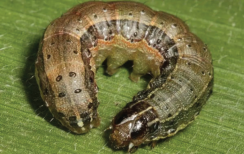
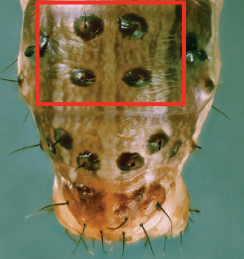
* Photos & information from: www.mpi.govt.nz/biosecurity/exotic-pests-and-diseases-in-new-zealand/lo…-
programmes/fall-armyworm-in-new-zealand
Grass grub (Costelytra zealandica)

Grass grubs (GG) are found throughout NZ. Larvae graze the roots of grass, plantain and clover causing poor growth and plant death, mainly from March-July. In severe cases, pastures can be rolled back like carpet.
Identification
GG damage is seen in mid to late autumn, typically as patchy areas of dead plants, often pulled out by stock. Damaged areas can expand outward from year to year. Adults are copper coloured beetles 1 cm long seen flying at dusk in November to December.
The damage is caused by GG larvae which hatch from eggs in October-December and develop through three instars (or stages). The small first and second instar feed on roots and soil organic matter, doing little damage. By autumn they have developed into the larger and most damaging third instar, feeding 10-30 mm below the ground on plant roots. GG larvae prefer white clover but eat most other species too.
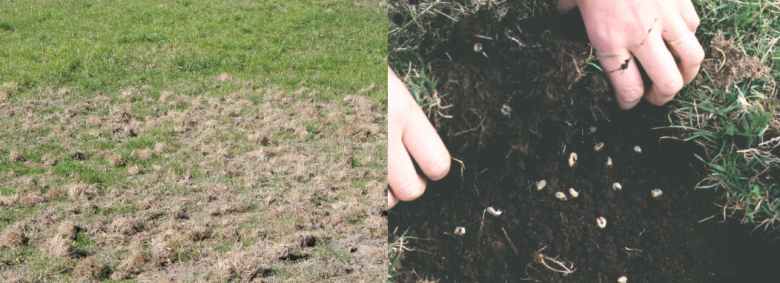
Patchy grass grub damage shows in pastures during late autumn (left). GG larvae found in the root zone (Right)
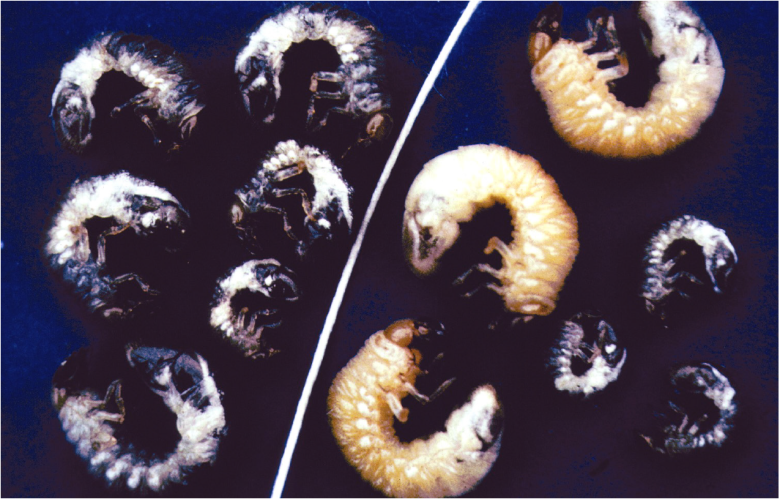
Populations typically grow over a 3-5 year cycle then crash due to disease build up in the soil. Within a single paddock, infestations can be at any stage in the cycle.
GG larvae are best found by digging. They are translucent grubs, 25 mm long, with six legs and a honey brown head. Usually curled in a C shape, they become active only when disturbed. This can help distinguish them from Tasmanian grass grub which actively crawl away.
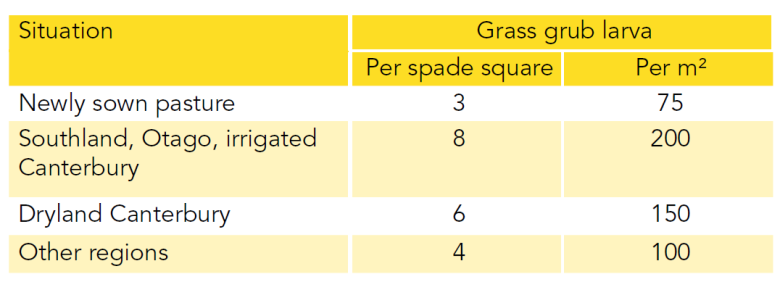
Threshold levels for economic control of grass grub have been estimated (see below).
Threshold levels for economic control of grass grub
Life cycle
Typical one year GG cycle
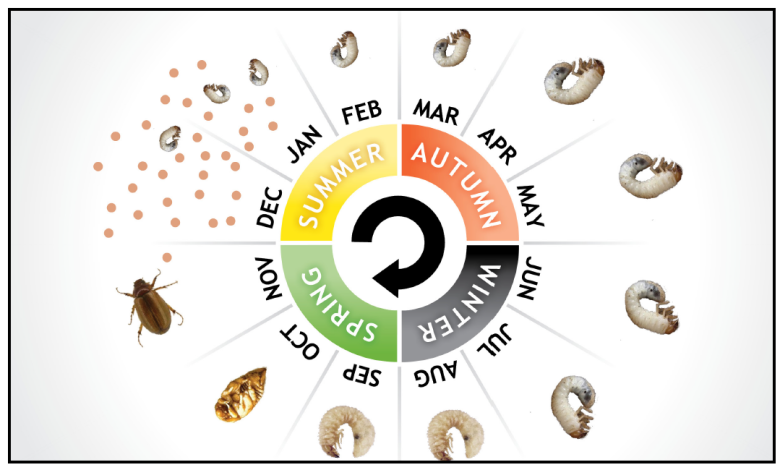
The GG life cycle typically takes one year, but in cool or dry regions some grubs take two years to develop.
One year GG pupate in spring, emerging as adult beetles which fly in October-December, starting the larval stage again.
In dry or cool areas where some larvae take two years to become adults, they cease to feed over their first winter, and resume feeding through spring, rather than pupating. They can cause spring pasture damage.
Establishing pasture
If establishing a new pasture into a paddock with GG problems, use insecticide or Agricote Grass seed treatment. Note GG primarily feed in the autumn, but control may be required for spring sowings in areas where GG have a two-year cycle. Check pest numbers before sowing.
Good cultivation drastically reduces GG larval numbers, but also disrupts natural diseases, usually leading to a rapid resurgence of the population two to three years later.
Direct drilling is often used in GG prone areas as a more sustainable solution. Rather than killing GG, it maintains much more stable populations and damage levels.
Management of established pasture
For an established pasture, insecticide control has had mixed results, as soil dwelling insects are relatively difficult to kill. Best success is through early applications of chemical in February-March, when GG are close to the soil surface. Mob stocking and heavy rolling when soil is damp can reduce GG populations, but effects are variable.
Manuka beetle (Pyronota festiva, P. laeta & P. setosa)

The native manuka beetle is found in damaging numbers on the hill country of both islands and some lowland areas of the West Coast of the South Island, often in pastures close to manuka scrub or undisturbed bushland. Larvae damage pastures by feeding on plant roots mainly from February to May.
Identification
Adult beetles live for a few weeks in late spring and early summer. They are ≤ 9 mm long, usually a bright metallic green colour, with females laying around 30- 40 eggs.
Beetle larvae, up to 10 mm long, are grey/white with a tan head. The larvae can be mistaken for grass grub (GG) due to similarity in appearance and damage caused in pasture. Larvae typically lie in a C shape but are active when disturbed.
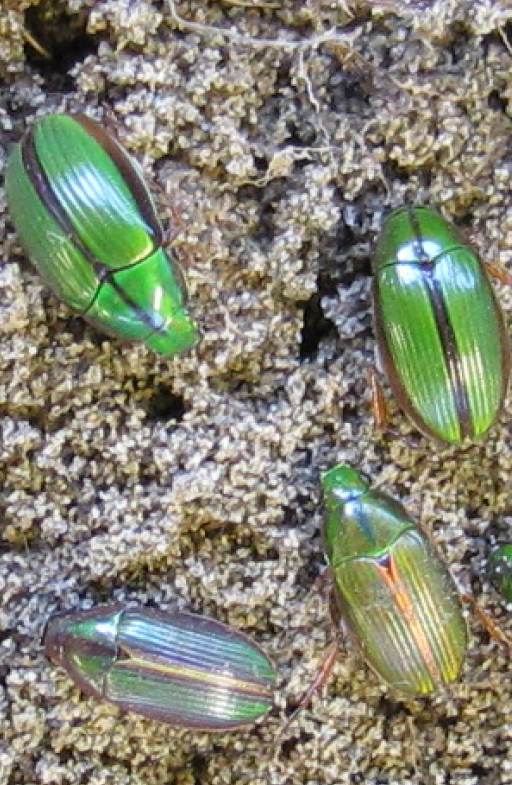
One generation is produced annually. P. festiva and P. laeta males and females are strong fliers. Females lay their eggs over a wide area. While P. setosa males are also strong fliers, P. setosa females are not, so eggs are laid close to where adults emerge.
With no treatment, patches will increase in size from year to year. Larvae feed on the roots of both clovers and grass within pastures. They focus on living roots but can survive on dying or dead roots for extended periods. Most manuka beetle species are strongly attracted to manuka or kanuka scrub where feeding can occur, however P. setosa do not congregate or feed on manuka.
Damage shows as yellowing foliage, usually in young pastures, 2-3 years after development from native vegetation or bush regrowth. In severe conditions, plant pulling occurs when grazing.
High larval populations reduce DM production and cause patchy damage of pastures, creating space for weeds. Pasture renewal is often required if larvae are left untreated.
Prevention & management
The risk of manuka beetle is best assessed from the previous paddock history. Early recognition of infestation means control methods have a better chance of success.
Detect damage by:
- Digging up spade squares of pasture from mid-February. More than 12 larvae per spade square can cause significant damage.
- Visual assessment of damage patches, more obvious from March onwards.
Pasture mealy bug (Balanococcus poae)
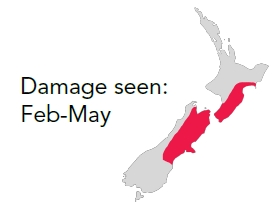
Pasture mealy bug (PMB) can sometimes be a serious pasture pest in Canterbury, and is known to occur in Manawatu and Nelson.
PMB is a small insect found in the crown and on the upper roots of a range of pasture grasses, where it sucks sap from the grass. Unlike many other pasture pests, it was originally identified on native tussock grass and is endemic to New Zealand.
Adult mealy bugs are pink, egg shaped, have no easily discernible head or legs and grow up to 5 mm in size. The crawlers (the smallest immature stage) are less than 1 mm long, and have a pink tinge to them.
Identification
The best way to identify PMB is to dig up ryegrass plants in autumn, and pull them apart to look for white, waxy secretions in the plant crown and upper roots. These will appear as cotton wool-like globules.
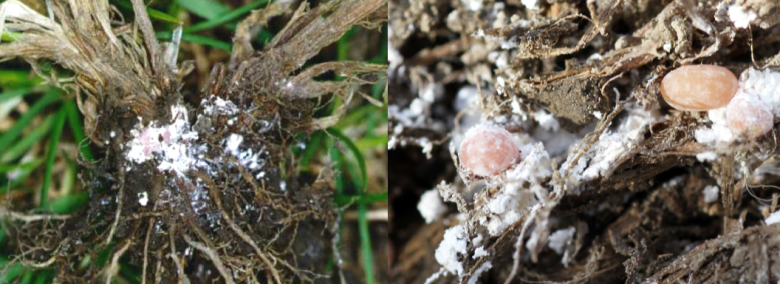
Evidence of PMB is seen as white waxy spots in the base of ryegrass plants (Left). PMB magnified.
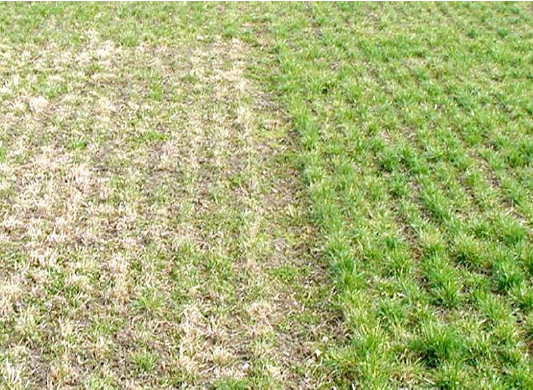
Outbreaks of PMB are common in pastures without endophyte in Canterbury. Damage was initially mis- identified as the result of drought because affected paddocks resemble a browned off pasture. Symptoms of PMB may first become apparent in January, if it coincides with a dry spell. Damage is most noticeable in autumn and early winter where pastures remain browned off.
PMB damage tends to affect a whole paddock, rather than isolated patches. It causes widespread ryegrass death, leading to poor pasture persistence.
Biological control
All endophytes are believed to give a high level of resistance to PMB.
Plantain moth (Scopula rubraria & Epyaxa rosearia)
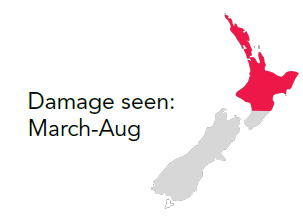
Plantain moth (PM) caterpillars are a significant pest of plantain nationwide.
They can cause severe damage, particularly in pure plantain crops.
Identification
PM comprises at least 2 native moth species, known previously as ‘carpet moths'. Both are relatively small.
E. rosearia are slightly larger than S. rubraria which have a wing length of 9-10 mm. PM are light brown with dark spots and a distinct dark brown band towards the end on the wings. This band is more obvious on E. rosearia while S. rubriaria has a more spotted pattern.
S. rubraria caterpillars are brown but vary in tone and pattern. E. rosearia caterpillars are green or brown; both grow to <20 mm long.
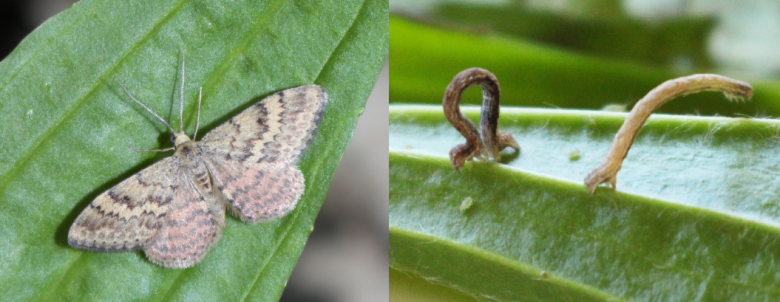
PM (S. rubraria) feeding on plantain.* PM caterpillars are small, growing up to 20 mm.*
Damage is more likely when a mild winter is followed by a dry summer.
A short generation time (7 weeks) allows for exponential population growth. PM are most abundant in late summer and largely disappear from crops in autumn.
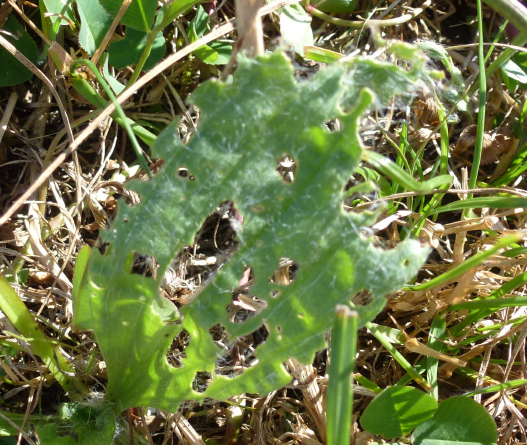
Caterpillars feed on the leaves creating holes or leaf marginal notches which can combine and in severe cases leave only leaf veins. Severe damage (90% destroyed) has been reported. Damage can be highly localised.
Prevention & management
Crop health, plant stress and growing conditions significantly influence damage severity; a healthy crop is more tolerant of PM than one which isn’t actively growing.
Some chemistry is registered for control of PM caterpillars; speak to your local crop protection advisor for specific information.
Porina (Wiseana sp.)
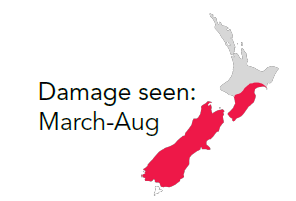
Porina are found throughout NZ, with species present varying between regions.
Caterpillars attack most pasture species including ryegrass and white clover. AR37 endophyte provides a level of tolerance. Inital bioassay, with NEA12 and RGT18 endophytes indicate they will too.
Identification
Porina caterpillars damage pasture in late autumn and during winter as growth slows. Caterpillars are greyish yellow with a dark brown head, and grow up to 70 mm in length. They live in tunnels in the soil, emerging at night to feed on the surface, grazing grass and clover.
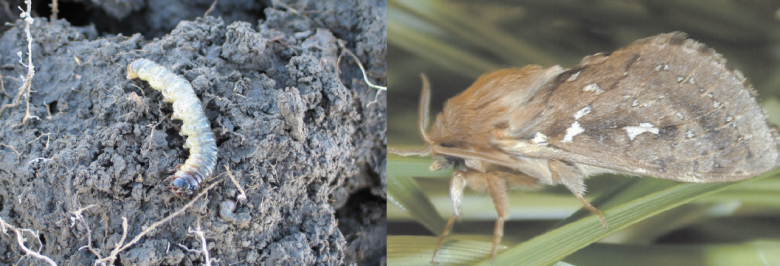
Porina caterpillar grow to 70 mm long & leave their tunnels to surface feed at night (Left). Porina moths are about 25 mm long and brown in colour.
Their tunnels are associated with bare patches of pasture, and dead plants. Tunnel entrances can be found as holes, covered in soil castings and debris held together with silken threads.
To assess numbers dig to 30 cm deep. Caterpillar populations of 2/spade square (50/m²) in March can reduce pasture production by 1500 kg DM/ha. Caterpillars at this time range from 4-30 mm in length, with a high proportion of small caterpillars suggesting damage will increase.
Adult moths fly mainly in October-January, and do not feed. They are brown with white and black markings on the forewing. A female will scatter up to 3000 eggs, which hatch over the following two to three weeks.
Porina eggs and young larvae need good protection within pasture, therefore populations fluctuate year to year, being highest in years of good summer growth and in pastures allowed to become rank.
Prevention & management
To reduce the risk of porina damage, maintain low pasture cover during late spring to reduce survival of eggs and young larvae. Paddocks left for hay or silage, or poorly grazed and rank, are typically worst affected by porina as higher pasture covers help eggs survive.
Porina can be relatively easily controlled by nsecticides. Insect growth regulators should be applied late January-early March. Organophosphate and synthetic pyrethroids can be used later, in which case digging in April will give a good assessment of numbers. If possible apply insecticide to short pasture.
Mob stocking in summer can control porina. Intensively graze pasture to 20-30 mm using high stocking rates (1000 ewes/ha) over a few days.
Biological control
AR37 provides pastures with a level of porina control. Initial testing with NEA12 and RGT18 has shown they also provide a level of control.
Experience suggests pastures with these three endophytes will still need to be monitored for porina and sprayed when larval numbers are high (but sprayed less often than other endophyte options).
Root aphid (Aploneura lentisci)

Root aphid (RA) has become recognised as a pest relatively recently and the damage it causes is not well understood
Identification
RA feeds on ryegrass roots, sucking sap and producing a white waxy substance. It has a similar appearance to pasture mealy bug which can be confusing. Both pests surround themselves with a white, waxy secretion but RA is found deeper in the soil on roots, whereas mealy bug is found in the crown of the plant. RA is also smaller than adult mealy bug, yellow-white and oval- shaped.
Adult RA are on average about 2 mm long with 2 tiny segmented antenna. The aphid body is creamy or pale yellow with tiny legs visible below the body.
Numbers can be assessed by digging up a spade square of pasture 30 cm deep, breaking the sod apart and looking for the characteristic white waxy exudates. RA numbers tend to vary widely across a paddock. An average of 20 root aphid colonies per spade square may cause a reduction in ryegrass productivity.
RA is not believed to kill plants, but its damage may be additive to that of other pests or stresses such as summer dry conditions. As roots are damaged from feeding, RA will move onto new roots.
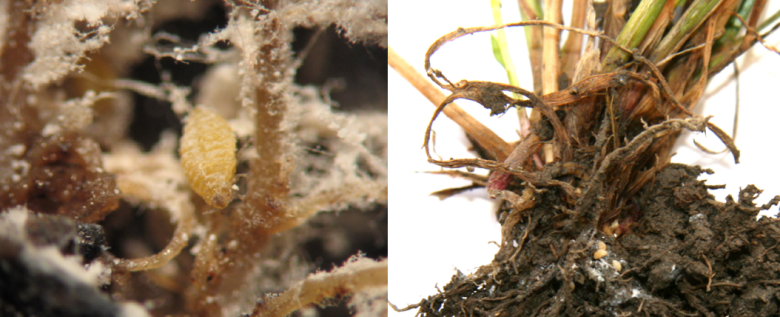
Root aphid feeding on perennial ryegrass roots. Root aphids in a small colony.
Biological control
RA can be controlled to a significant level by ryegrass endophytes NEA12, AR37 and CM142 give very good control of RA, while NEA2 and NEA4 endophytes provide moderate control. Plants with AR1 endophyte (or without endophyte) have no RA resistance.
Slugs (Deroceras sp.)
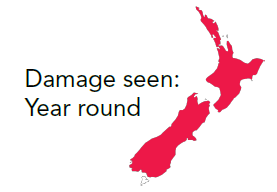
Slugs are everywhere in NZ and can rapidly cause severe seedling loss in establishing pasture and crops. Take particular care with over-sowing or direct-drilling where surface trash is present.
Identification
There are eleven introduced species of slugs in NZ, of which the grey field slug is the most common. They generally live in the top 2-3 cm of the soil surface.
Slugs are present in most pastures throughout the year, causing some, but not significant damage. Populations are highest under favourable weather conditions: moist soil, moderate temperature and high humidity.
Slugs can severely damage establishing pasture and crop, feeding on germinating seed and newly emerged seedlings. Spray-drilled pastures and forage crops are particularly vulnerable.
Slugs can move along the drill rows, killing seedling plants, and utilising the cover of surface trash. Slime trails are often visible with the early morning dew.
Check numbers by leaving wet sacks or similar objects in the paddock overnight just before drilling. Count slugs the next day. Any more than six per object are considered potentially damaging to pasture establishment.
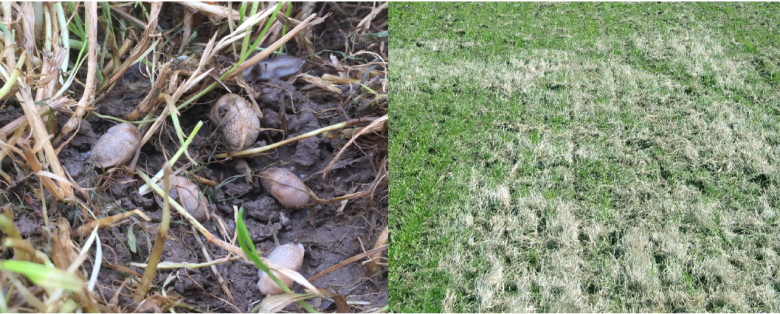
Slugs in base of pasture. Typical slug damage.
Prevention & management
When sowing into a known slug population, molluscicide baits either at sowing or just prior, can provide economic control (refer to table). Be mindful of the surrounding areas as slugs can move in from roadsides and adjacent paddocks.
Biological control
Mob stocking can give high levels of slug control and can be used before, or immediately after sowing. To be effective aim for 1500 ewes/ha for one night, or 500/ha for three nights.
Effect of molluscicide on pasture establishment (MAF Normanby)

Tasmanian grass grub (Acrossidius tasmaniae)
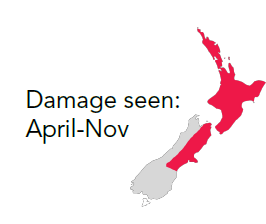
Tasmanian grass grubs (TGG) are found in the lighter soils of lower Northland, Waikato, Bay of Plenty, Hawke’s Bay, Marlborough and Canterbury. Larvae graze pasture plants above the ground, killing plants and leaving bare patches.
Identification
When identifying TGG, be careful to distinguish them from native grass grub.
Adult beetles are attracted to dung, laying their eggs in or near it. Thus, initial infestations are typically observed around stock camp areas.
Eggs are laid from January-March and hatch into larvae which feed on dung for 4-6 weeks before moving onto pasture. From about April onwards grubs live in tunnels, at night coming to the surface to feed through to August (as late as November in some years). New pasture is particularly vulnerable to damage. Pasture growth can be reduced by 5% per 100 larvae/m2, and losses of carrying capacity of up to 5 SU/ha have been recorded.
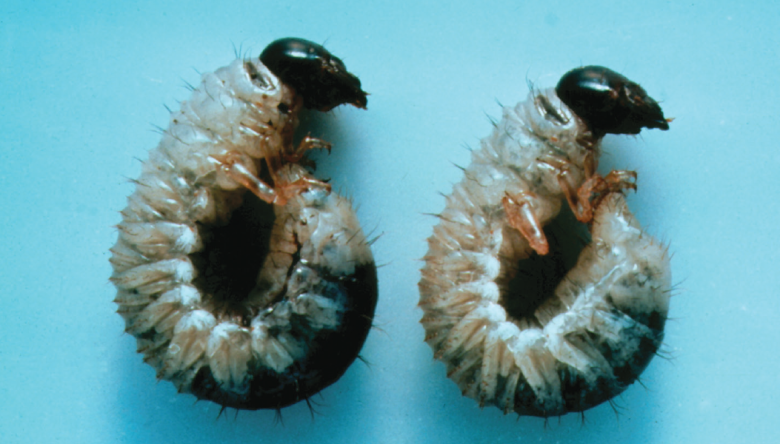
TGG larvae are best identified by digging, and are 15 mm long whitish grubs, with six legs and a black head. (This helps distinguish them from native grass grub larvae, which have a brown head, and are generally larger in size.) When disturbed, TGG larvae start crawling like caterpillars, unlike native grass grub larvae which typically assume a protective C shape.
In autumn larvae live 10-15 cm below ground in vertical tunnels, from which they emerge at night to graze surrounding vegetation. TGG have been known to establish in shelter belts then move out into adjoining paddocks.
Populations above two grubs per spade square (50/m²) will cause significant pasture loss and are economic to control.
Prevention & management
Insecticides are effective in controlling TGG. Populations will often be localised, making spot control with insecticide a useful approach to control.
Perennial pasture species are typically more tolerant of TGG, because larvae prefer annual grasses.
Maintaining dense pasture covers during summer reduces the survival of eggs laid by adult beetle.
Barenbrug wishes to acknowledge the help of Landcare research in producing this section