White clover diseases
This section lists a range of clover diseases, to help you identify them and their importance. Early detection and disease management are essential to maintain a healthy pasture.
Clover rust
Clover rust is caused by a complex of rust species in the Uromyces genus and is sometimes found on clover throughout NZ. It can reduce forage quality.
Identification
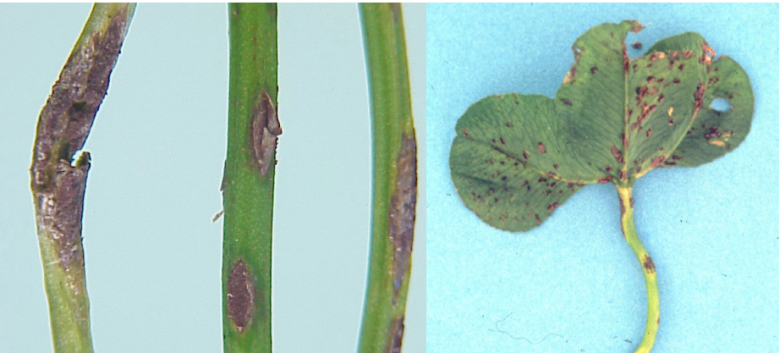
These rust pathogens produce yellow, brick-red or orange pustules on the underside of leaves and on the petioles. Pustules on petioles can cause characteristic twisting.
Prevention & management
Graze infected plants.
Clover viruses
Several viruses that attack clover are often seen together, including:
- White clover mosaic virus
- Alfalfa mosaic virus
- Soybean dwarf virus
- Clover yellow vein virus
- Bean yellow mosaic virus
- Watermelon mosaic virus
Identification
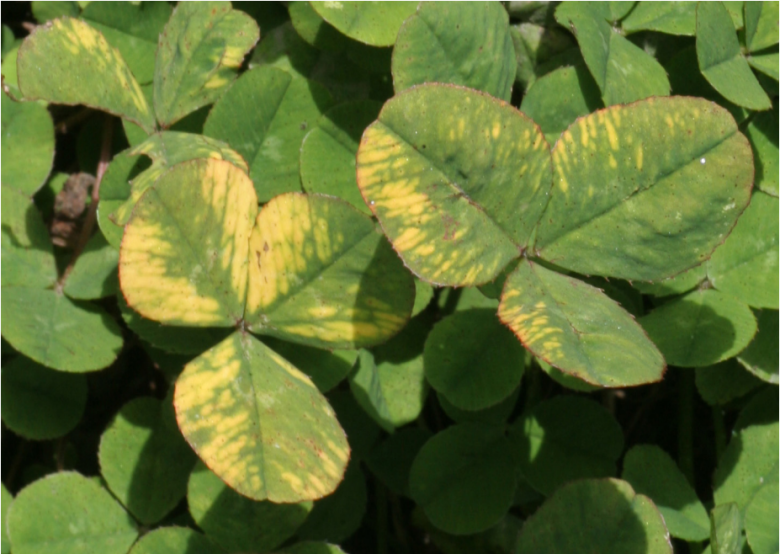
Symptoms are not always obvious and include leaf mottling, distortion, crinkling, size reduction and plant stunting. Some viruses may cause yellow patterns on leaves or cause them to turn red. Damage depends on clover species, age, location and the virus present.
Moderate loss of forage quality and yield is possible. Stress from virus infections may lead to plant damage or death from other pathogens or pests.
Spread
Viruses are spread by mechanical damage (mowing, trampling and feeding by stock), aphid feeding and seed.
Prevention & management
Little can be done to eliminate virus infections in clover. Sow cultivars well adapted to your region to reduce plant stress and virus susceptibility.
Leptosphaerulina leaf spot
This clover disease is caused by the fungus Leptosphaerulina trifolii and is very similar to common leaf spot. However, the pathogen only sporulates on the dead tissue in the bottom of the pasture.
For more detail on common leaf spot identification, spread, prevention and management, see common leaf spot below.
Common leaf spot
Common leaf spot (CLS) is caused by the fungus Pseudopeziza trifolii and mainly occurs in the cooler, moister winter months. This disease is common throughout NZ. Quality of conserved feed may be lost.
Identification
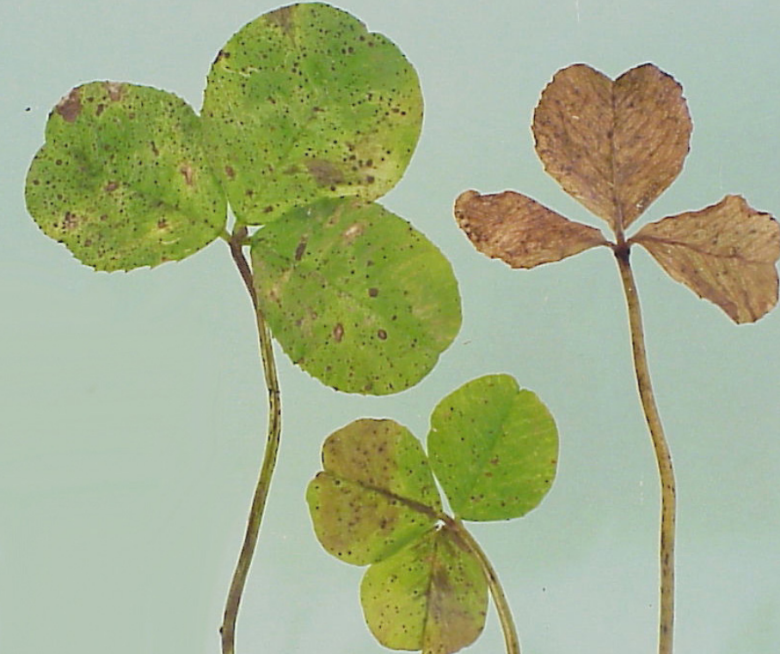
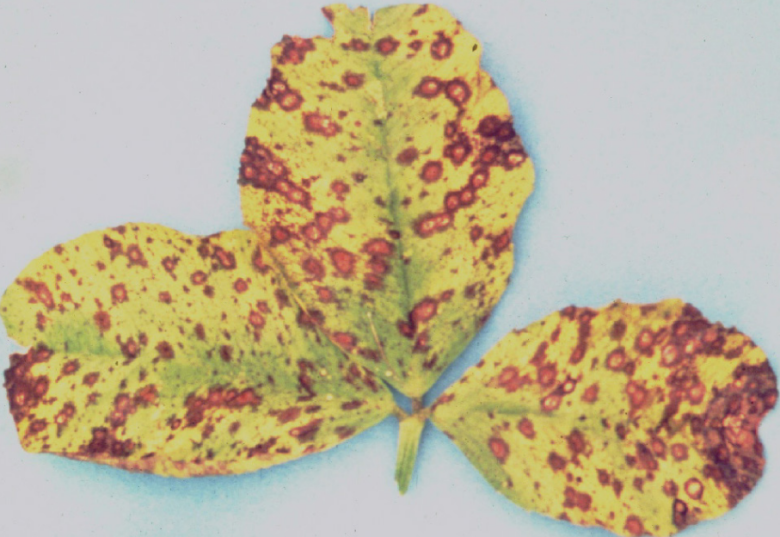
First symptoms are buff coloured, circular spots varying in size, with a darker fringe, on the upper leaf surface.
In severely infected pastures, leaves can curl up and turn brown. CLS occurs mainly in cool, moist conditions and is worsened by infrequent grazing.
Spread
Spores produced by the fungus are forcibly ejected into the air, and spread infection to new sites.
Prevention & management
Timely grazing or cutting minimises damage of infected pastures.
Sooty blotch
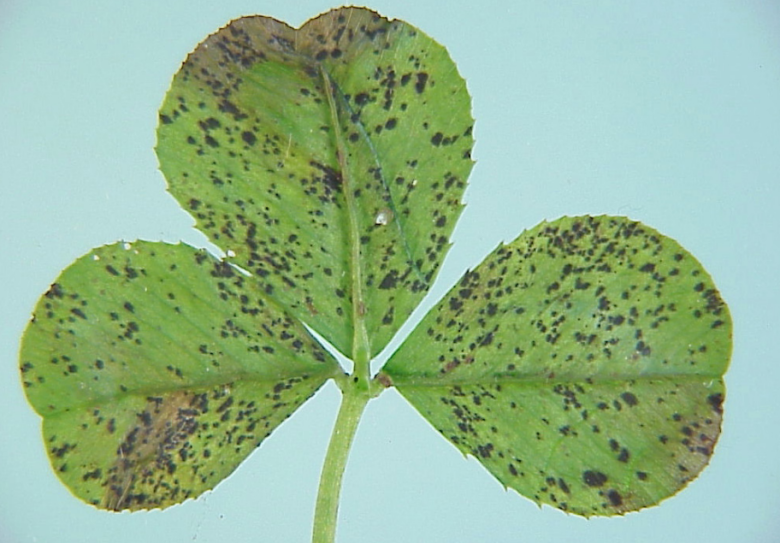
Sooty blotch (SB) is caused by the fungus Polythrincium trifolii and is common on white and red clovers. It can appear in early summer but is most common in late summer and early autumn, rarely causing economic loss.
Identification
SB causes stunting and partial defoliation. Raised dark green patches appear on the upper surfaces of leaves. Beneath these patches are black spots which produce numerous dark spores. Infected leaves first look healthy, but then become dry, discoloured and die.
Spread
During summer, spores of SB are spread via wind and water. In spring, infection occurs from sexual spores released at the end of winter from fruiting bodies in the trash.
Prevention & management
There are reports of toxicity to grazing stock. Diseased clover plants may also have higher levels of coumestans (flavonoid oestrogens) that can cause reproductive disorders in grazing animals. Timely grazing or cutting can minimise damage from this disease.
Sclerotinia rot
Sclerotinia rot is caused by the fungus Sclerotinia trifoliorum. It usually occurs in late autumn and winter, particularly on pure swards of clover. Generally it is not serious.
Identification
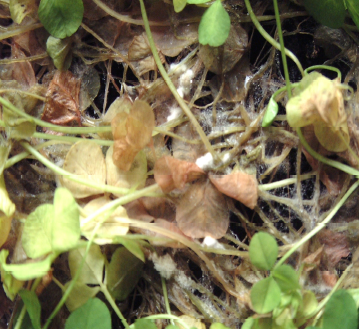
Leaves or petioles become flaccid and light brown. Disease spreads by white mycelium through into surrounding plants. Patches of clover can rot, causing a light brown slimy mass of decaying vegetation. Tufts of white fungus develop on affected tissue. These eventually turn into black bodies called sclerotia.
Spread
Sclerotia remain in the soil for several months. Under moist conditions sclerotia germinate to produce small, fruiting bodies which eject spores into the air, spreading infection. These require dead tissue to become established. The growing fungus produces phytotoxic enzymes that rot the host tissue.
Prevention & management
Graze at the right time to prevent clover becoming rank and wet. Fungicides are not economic.
Barenbrug wishes to acknowledge the help of Ian Harvey, Plant Diagnostics and Plant & Food Research in producing this section.