
Fodder beet & animal health
Fodder beet bulbs are very high in water soluble carbohydrate (WSC) and low in protein. This can cause animal health issues including rumen acidosis.
Fodder beet in the diet
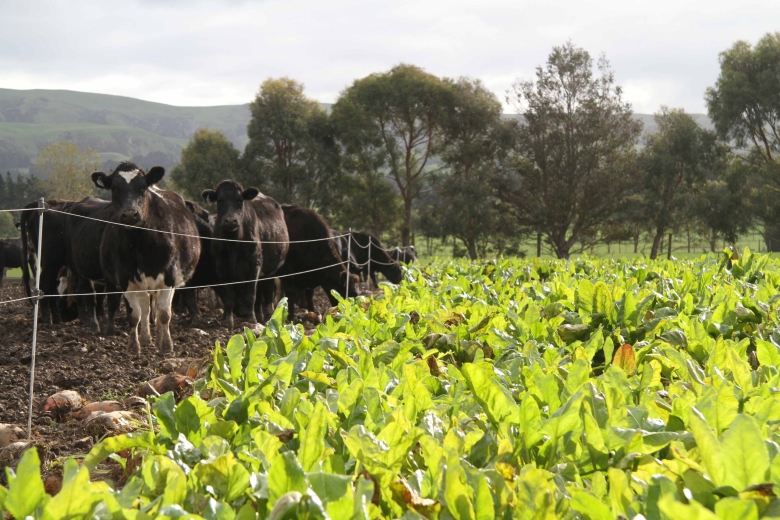
The daily allocation of fodder beet fed will depend on the stock class, age, desired LWG and the amount of crop available. After transitioning animals onto fodder beet, continue to feed high quality supplement as a significant proportion of the diet to minimise potential health issues. Fodder beet should make up no more than 60% of the diet for dry dairy cows, and no more than 30% for lactating cows.
Feeding high levels of fodder beet over 24 hours slows animal intake and reduces the risk of rumen acidosis compared to feeding the same amount of beet over 4-5 hours.
High utilisation rates (e.g. 90%) can be achieved on fodder beet, even with high crop allocation levels, as the feed quality of the whole plant is high.
Low levels of fodder beet in the diet are sometimes targeted due to performance levels required (e.g. maintenance feeding), or when fodder beet does not meet the nutritional needs of the stock.
Feeding supplement
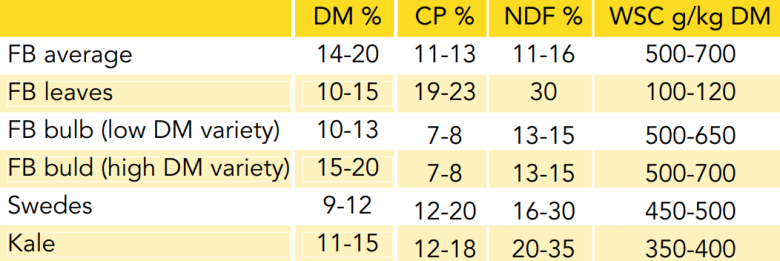
Fodder beet is low in fibre (NDF) and crude protein (CP), and high in water soluble carbohydrate (WSC). This means animals on beet require more fibre and protein than those grazing brassicas, depending on stock type, age and LWG expectations.
Normally it is best to supplement animals on fodder beet with good quality pasture silage because it contains both fibre and protein, rather than supplements with low protein (straw, cereal silage), particularly for young growing animals. A feed test will help identify the right supplement for animals grazing fodder beet.
Significantly changing livestock diet raises health risks as animals adjust to new feed. This is particularly so for fodder beet due to the risk of rumen acidosis.
Feed value
Nutritional composition of fodder beet (FB) versus brassica.
Rumen acidosis
Rumen acidosis is caused by animals eating diets high in water soluble carbohydrates (WSC) or starch too quickly.
Acidosis is most likely in hungry animals, during the transition period, or where crop allowance is suddenly increased (e.g. cows break out, or break size is mistakenly increased).
With acidosis, rapid fermentation of the WSC causes rumen pH to drop rapidly, often below pH 5.5. The change in acidity alters the rumen flora, with acid-producing bacteria taking over, exacerbating the problem. Low rumen pH can result in rumen stasis (no rumen contractions), reduced fibre digestion and depressed appetite, all of which affect production. In severe cases acidosis can kill animals.
Visual symptoms of acute rumen acidosis in cattle are:
- Scouring
- Reduced appetite
- Loss of body condition
- Bloating
- Dehydration
- Laminitis
- Rumenitis
- Milk fever
Clinical rumen acidosis is usually only the tip of the iceberg; sub-clinical cases are likely to go unnoticed. Reduce this risk through proper transition and avoid any sudden increases in daily intake.