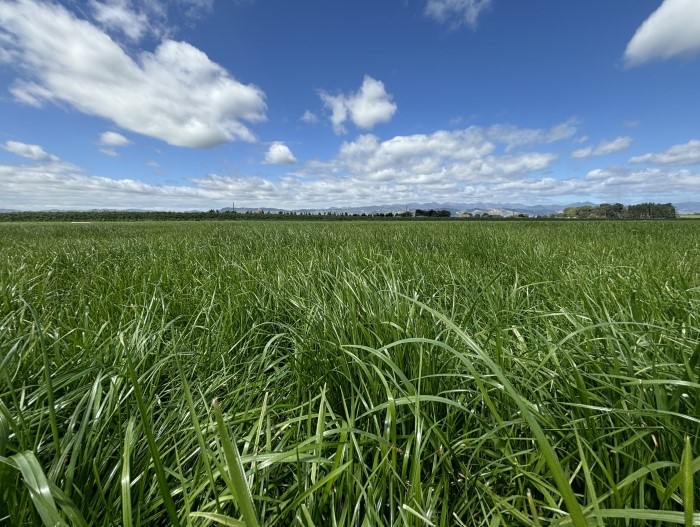
Maximising pasture utilisation
A big challenge on-farm is pasture utilisation - getting animals to eat the optimum volume of feed grown. To achieve this, focus on achieving consistent post-grazing residuals and grazing at the right time.
What is possible?
Typical utilisation of our pastures on flat to easy country is believed to be 60-70% of yield grown, with top operators reaching 75-85%. Utilisation is also affected by conditions. It is highest on free draining soils, and poorest during wet weather.
How can utilisation be improved?
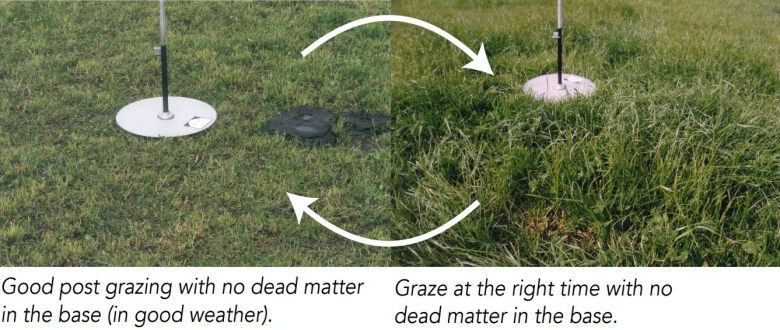
Focus on what’s left after grazing, the post-grazing residual. Get this right, and you’ll harvest a high amount of pasture. More importantly, you’ll leave the paddock in the right state to regrow leafy, quality grass for the next grazing.
Graze at the right time
Grazing at the right time (2.5-3 leaves per tiller), before the pasture loses quality at the base, produces high quality feed. With the right stocking rate and allowance, animals will graze to the right residual, perform well and achieve high utilisation needed to make the pasture system efficient.
Be consistent
The goal is to graze to the same residual all the time. High utilisation is easier when feed supply is tight. A focus on residuals is most important during periods of excess growth and tools such as mowing or making silage are important to help achieve this.
Residuals in bad weather
In wet weather, particularly on heavy soils, achieving normal residuals is not possible due to potential soil damage. When this happens, the priority should be to avoid damage and, if necessary, accept a higher residual in the short term, aiming to correct this at the next grazing (see Managing pasture in the wet).