Bareno
Bareno offers high yield, strong palatability year-round, and thrives with legumes; best sown in warm soil (12°C+).
-
Excelling on tough, summer dry sheep and beef country
-
Palatability through all seasons
-
High yield

Pasture brome
Bareno thrives where perennial ryegrass fails, excelling on tough, summer dry sheep and beef country with free-draining soils.
Flexible
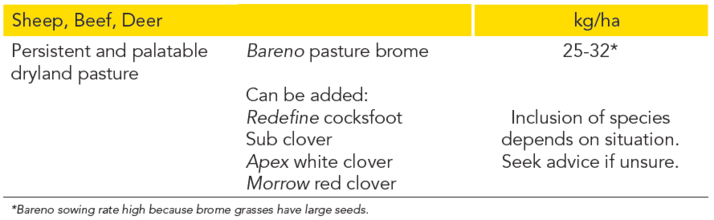
Bareno provides a palatable, persistent and flexible pasture for dryland farming that can tolerate both rotational grazing and set stocking. Bareno's persistence may decline in the upper North Island, so it is less suited to this region.
Tasty year round
A strong feature of Bareno is its palatability through all seasons:
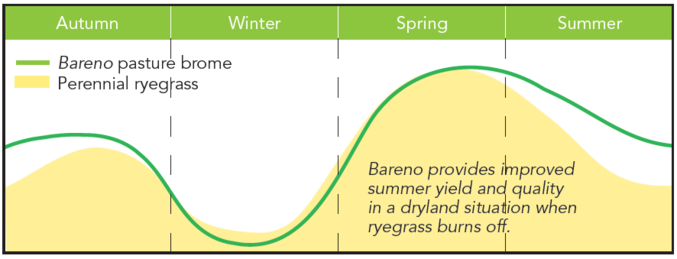
- It remains palatable, even when seed heads are present, and stays greener and leafier than ryegrass in summer.
- Bareno can support a high legume content (40% sub and white clover has been measured in spring).
High yield
On Lincoln University’s Silverwood Farm, a dryland breeding property in inland Canterbury, Bareno produced 12.5 t DM/ha/year, 9% more than new sowings of perennial ryegrass (11.5 t DM/ha), with excellent spring, summer and autumn growth.
Seasonal growth
Sow early
Brome grasses are slower to establish than ryegrass, particularly in cold temperatures, so always:
- Sow when warm - soil temperature 12°C+ in late summer or early autumn.
- Summer fallow before sowing in dry regions.
- Direct drill – this has proven very successful.
Sowing Bareno