
Mild winters increase cutworm pressure on crops
Don’t get caught out!
Insect pest vigilance is key with spring-sown crops this year, experts say.
Whole paddocks of summer forage and maize were wiped out last season by unusually high greasy cutworm (Agrotis ipsilon) numbers and had to be re-sown in some areas.
Even some farmers meticulous about scouting newly-germinated forage crops say they got caught out.

Bioeconomy Science Institute (BSI) research associate Derrick Wilson says El Nino creates ideal conditions for cutworm.
“Mild winters allow more pupae to survive, leading to larger moth populations in spring.
“These moths begin laying eggs earlier, and the resulting caterpillars emerge at exactly the wrong time for growers, when crops are just establishing and most vulnerable.”
Maize is a favourite target, but they can also decimate chicory, turnip and forage rape seedlings.
And on at least one farm in Taranaki, they removed all the clover in a two-to three-year old pasture last season.
Barenbrug pasture specialist Graham Kerr says forewarned is forearmed, and farmers, resellers and consultants planning spring-sown crops should prepare accordingly.
“We know the risk is likely to be high. The trouble with cutworm is that by the time you see significant signs of feeding, the damage is already done. We want farmers to be on guard this season.”
Having been ‘nailed’ by cutworm in 2024/25, Otorohanga dairy farmer Bruce Collinson-Smith took no chances last spring, and will do the same this season.
He direct drills about 180 ha of maize, chicory, turnips and winter swedes a year.
“Everything gets sprayed for cutworm now. If we time it right, we only need to do it once. Generally, we find it works best when the crop seedlings are around the two-leaf stage.”
Forty per cent of turnips sown in spring 2024 were destroyed by cutworm in a week, and had to be re-sown, he says.
“We’d had it before, but never that bad. Anything that wants to kill a crop has got worse in the past five to seven years.”
Recent mild winters in South Taranaki have also changed the pests affecting summer crops for dairy farmer Angus Middleton at Waverley.
“Our biggest issue here has always been springtails, which we’ve been able to deal with through good crop management,” he says.
“Over the past two to three years, however, more cutworm has been evident in maize. We had to re-drill about six hectares of maize last spring, but it was particularly bad in our chicory.”
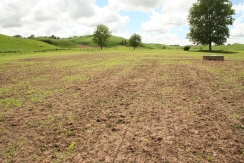
Despite good monitoring, high populations of cutworm ‘smoked’ parts of their crop, and 12-14 ha of chicory had to be re-sown.
With chicory playing a critical role in his farm system, Middleton is now looking at ways to reduce the risk of similar damage this year.
“We’re not afraid to spend money on insecticide, pest prevention and spraying if we need to, because we know the value we get out of those crops in summer.”
Stratford dairy farmer Thomas Higgins says cutworm attacked where he least expected it last year.
“They didn’t really touch the chicory, but in late summer, they demolished the clover in one of our recently-established pastures, then moved onto the grass. I’ve never seen cutworm in pasture here.”
Preparation for cutworm and early action are critical under El Nino conditions this spring, Derrick Wilson from BSI says.
“Weedy paddocks, particularly those containing plantain and dock, can favour greasy cutworm populations by providing alternative host plants.
“Controlling these weeds and implementing a fallow period, where the paddock is left free of crops and weeds for at least six weeks, can help reduce cutworm numbers by removing food sources and disrupting their life cycle, lowering the risk of infestation in subsequent crops.
“Using insecticide treated seed can provide early protection during establishment and this also helps control other pests such as black beetle and Argentine stem weevil.
“Regular crop scouting is essential. Damage is often detected only after it has occurred, so frequent monitoring allows growers to respond quickly with appropriate control measures if needed.”

Reviva
-
High Yield & Regrowth
-
Leafy & Highly Utilised
-
Quality Feed, Fast Maturity