
Meet the new codebreakers
The future isn't being discovered; it's being deciphered.
It’s no coincidence early breakthroughs in understanding DNA were so often described as cracking the code of life.
Those who pioneered molecular genetics did so at the dawn of digital computing, soon after World War II, and they leaned heavily on wartime advances in cryptography and information theory.
Today genetic information is so easy to generate it’s almost a commodity. But that doesn’t make it any easier to turn it into improved pastures!
Fresh codebreaking skills are needed, to sift meaning from vast amounts of seemingly meaningless letters, symbols and numbers, and help breed better plants. Welcome to bioinformatics, coming soon to a pasture near you.

Bio what?
Like farming, plant breeding has become ever more complex this past decade. Genomic technology lets us target many useful traits, like nutrient use efficiency and heat tolerance, simultaneously, at scale and speed.
As a result, we now have more data than our predecessors could have imagined, and are working towards pasture gains once uneconomic and impractical.
Exciting, yes. But also challenging. Raw data is to plant breeding what crude oil is to your tractor – no use until refined.
We’ve always needed plant scientists in our breeding team. Now we need digital scientists, too, with advanced computational skills to analyse that data, develop predictive tools and models, and translate it into useful information for our breeders.
Such is the role of bioinformatics, our most recent layer of science in pasture improvement.
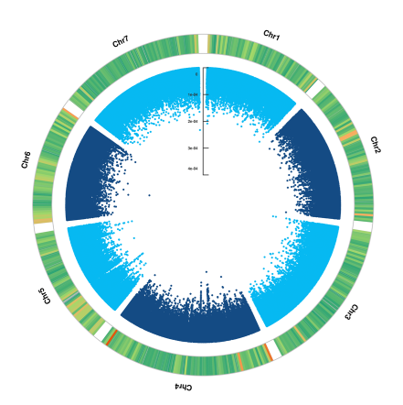
Analyse this
Barenbrug global science manager Dr Luke Pembleton says the rise of cloud computing and open source software has made it easier to bring big data analysis in-house.
It continues the ‘aggressive’ improvement in commercial breeding processes that began with genomic technology, speeding up pasture selection, and cutting the time needed to get innovative plant traits out on farm.
“Plant breeding is still quite slow. But our design process is becoming much more efficient and streamlined, so we can adopt new things more quickly.”
The work done by Luke and fellow Barenbrug bioinformaticians, Elco van Rijswijk in Holland and Ayo Fakoya in Canterbury, is critical to continue breeding pastures to fit future farm systems, explains New Zealand R&D manager Courtney Inch.
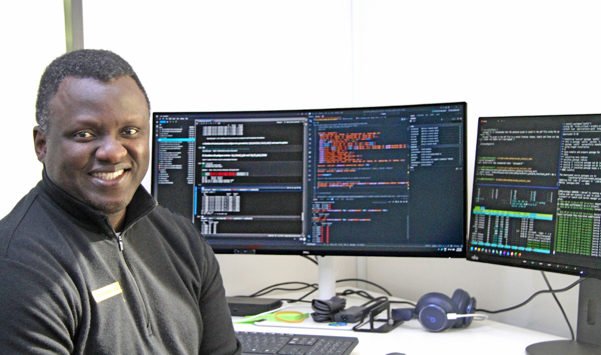
Looking in
“Once you break DNA down into its different elements, there are thousands and thousands of variations. So big data is a whole new area of expertise we have to incorporate into our breeding process.
“Our bioinformatics team speaks a very different language – they specialise in computer coding, data science, mathematics and genetics.
“And we need that capability, on top of our traditional focus on all the other key physical factors that make a good cultivar, like yield, grazing tolerance, feed quality and disease resistance.”
Melding the new science with the old is not a one-way street, however. The bioinformatics team is still forming; the newest member Ayo Fakoya, for example, was only appointed in June.
But Luke says by creating interactive interfaces with genomic data, they’ve already started involving breeders more closely in analysis, rather than analysis serving only to inform breeders.
“A key part of the role is sitting at the intersection of genomics and plant breeding, ensuring new technologies and data can be applied in ways that deliver real-world gains in the breeding programme.”
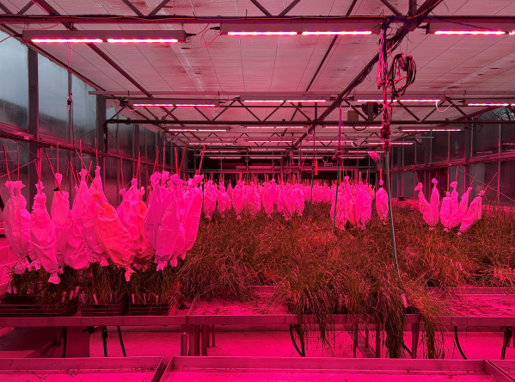
Looking out
Bioinformatics represent the newest evolution of our plant breeding effort, but our science investment extends beyond this discipline, and beyond our business.
Collaborative industry-good research like Pasture Accelerator, a $21 million, seven-year Sustainable Food and Fibre Futures project, offers progress beyond what any single partner could achieve alone, Courtney Inch says.
“We’re doing more joint work with other parties these days. Science is expensive; pasture plant breeding is a very small industry by global standards, and we need to share resources and expertise to achieve the scale required to make a difference.”
Involving MPI, DairyNZ, Barenbrug and Grasslands Innovation Limited, Pasture Accelerator seeks to speed up traditional ryegrass and clover breeding through genomic technology.
We have also teamed up with biochemists at Otago University to investigate F1 hybrid breeding techniques for ryegrass, and a novel type of white clover.
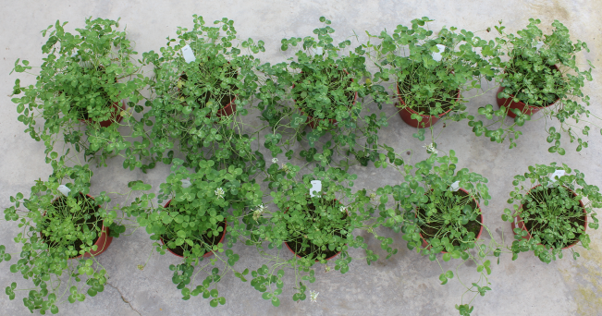
What next?
You don’t have to wait for genomic breakthroughs to get the best out of the pasture you’re growing today.
Just get in touch with us for a free, personal Pasture Health Check to start making your own improvements straight away.
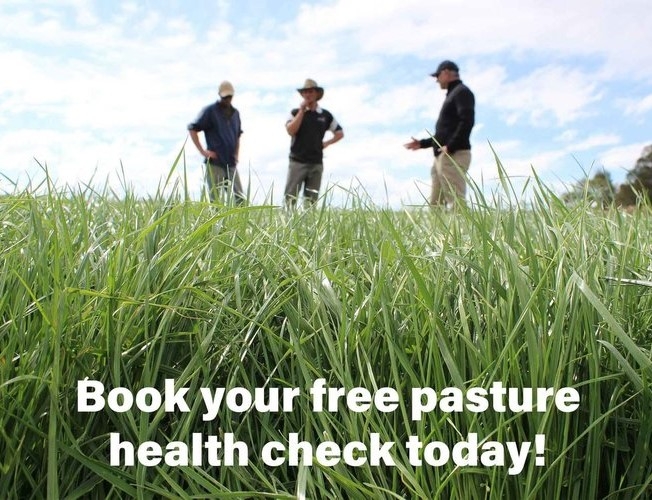
Book a free pasture health check
Click here to request a free on farm pasture health check with one of our local experts.