
Soil structure & health
Healthy soils support sustainable, profitable plant growth. Soil structure and biology are key physical indicators of soil quality, and play a critical role in selecting appropriate pasture renewal methods.
The risks
Cultivation, particularly PTO powered cultivation (e.g. power harrowing) can degrade soil structure, disrupt biological activity, release soil N and release carbon. Fragile soils such as ash, pumice, light/sandy loams and some peats are particularly vulnerable to loss of structure, with long-term physical effects including compaction, pan formation, reduced porosity, erosion and run-off.
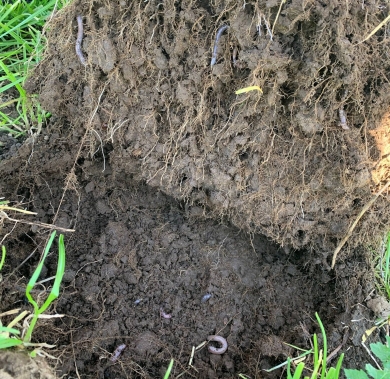
Soil quality & new pasture
The roots of new pasture plants cannot move freely through soils with poor or degraded structure. Rooting depth directly affects pasture persistence, because shallow rooted plants obtain less water and nutrients than those which penetrate deeper into the soil profile, and are pulled out more easily.
Do not disturb
Direct drilling or minimum tillage reduces soil disturbance and helps protect soil structure, especially on fragile or light soils. It also reduces the number of passes over the soil with heavy machinery; and minimises disruption to soil biological activity (e.g. beneficial insects, microbes). But more care, and usually cost, with insect and slug control is needed.
What’s down there?
A visual soil assessment (VSA) helps identify soil quality issues and provide a practical, immediate insight into overall soil health. A VSA Field Guide can be downloaded from Landcare Research or videos are available on YouTube.