Ryegrass heading dates
Heading date is when a cultivar shows seed head in spring. A late heading date can mean better late spring quality.
What is heading date?
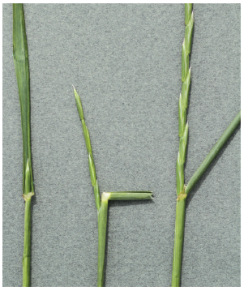
Heading date describes when a grass cultivar has 50% of tillers with seed heads emerged in spring. It is also known as ‘ear emergence date’, (see photo).
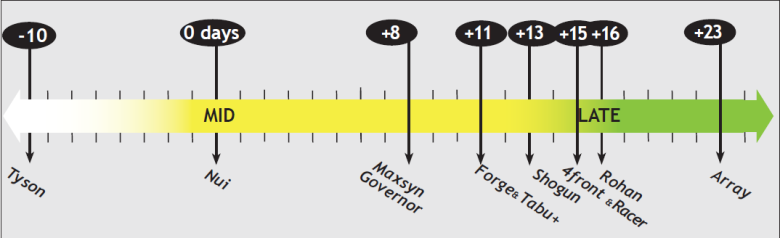
Day 0 is based on traditional cultivars such as Nui, which typically heads around the 22nd of October in Canterbury. But this can vary by 2-3 weeks from year to year. A cold early spring delays heading, whereas a warm spring can bring it on earlier.
A +14 day heading date means a cultivar will a produce seed head 14 days later than Nui (Day 0).
Heading dates of Barenbrug ryegrasses
Using ryegrass heading dates on farm
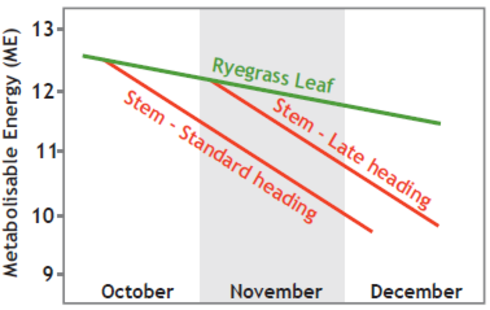
As ryegrass goes to seed in late spring, stems develop, fibre levels rise and quality drops as illustrated below. Late heading cultivars delay the start of seeding, thus maintaining animal intake and performance in November.
Advantage of late heading
Late heading & early growth
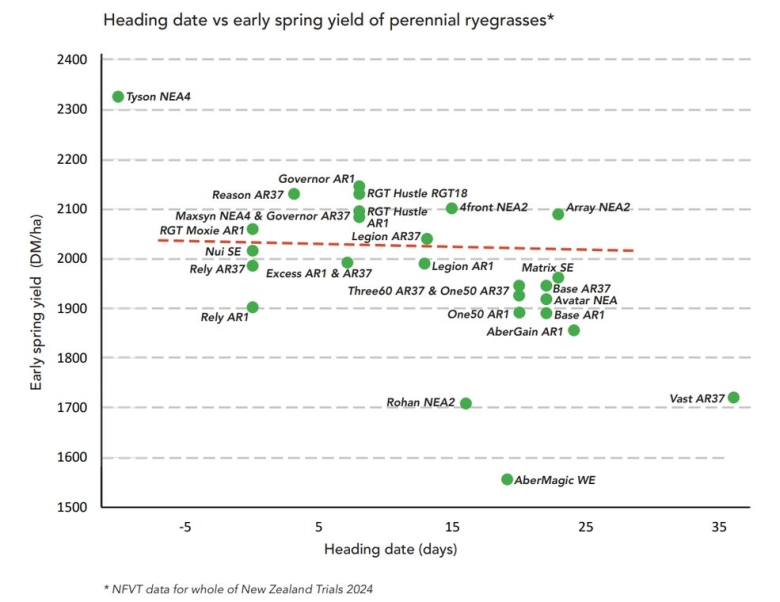
The first late heading perennial ryegrasses in NZ had poor early spring yield, but this is no longer the case. Recent breeding has combined early spring growth and a late heading date in a cultivar (e.g. Array NEA2). This is shown below by graphing the 2024 National Forage Variety Trial (NFVT) early spring cultivar yields versus heading date. Apart from a few outliers (e.g. Tyson, Abermagic, Vast) early growth is similar.