
Rectify causes of poor performance
Pasture renewal is not simple. Many factors can cause your existing pastures to perform poorly. Think of these like links in a chain. They must all be checked for consistently good results.
Address causes of poor pasture
Planning and attention to detail are key! One weak link in your renewal ‘chain’ can compromise your success, so all need to be addressed. There's no point sowing new pasture, for example, if soil phosphorus is too low.
Address all the 'links' in pasture renewal.
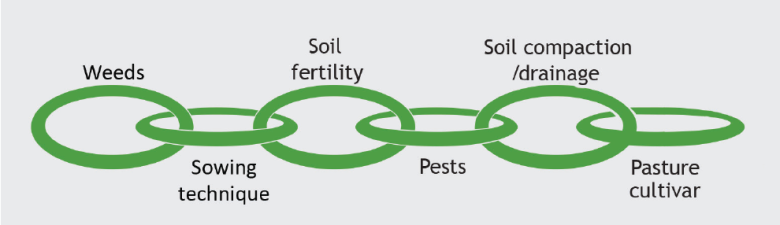
Potential limiting factors
Some areas that may need addressing include:
| Soil fertility: | Test soils, apply fertiliser as necessary (see Soil fertility - new pasture). |
| Low soil pH: | Add lime (see Soil fertility - new pasture). |
| Poor drainage: | Improve drainage. |
| Soil compaction: | Aerate by subsoiling, cultivation (see Soil structure & health). Consider management change (e.g. feed pad, sacrifice paddock, on/off grazing; see Managing pasture in wet conditions) |
| Sowing technique: | Use most appropriate method (see Technique, timing and depth). |
| Poor clover: | Sow clover seed ≤10mm deep (often doesn't happen!) Check soil pH, fertility and molybdenum. |
| Insect pests: | Sow a crop to break insect cycle; use treated seed and possibly insecticide (see Pasture pests). |
| Pasture cultivar: | Use quality cultivar(s) (see Pasture cultivars, Clover & herb cultivars, Ryegrass endophyte) and certified seed (see Seed analysis certificate). |
| Weed invasion: | Apply herbicide as required. High weed pressure? Consider a break crop. |