
Pasture palatability
Poor pasture palatability is caused by various factors, usually in combination. Your ryegrass cultivar is not one of them! Herbage tests can help identify where the help identify where the problem lies.
Weather conditions
Most issues for animal production occur in spring during wet periods, when sunshine is low and growth rates are rapid. This reduces pasture DM (<15%), and stops animals from eating enough to their meet daily energy requirements, because they are consuming a lot of water. Water soluble carbohydrates also drop with a lack of sunshine, reducing stock intake further. The issue typically solves itself when the weather improves. Mowing problem paddocks pre or post grazing can help maintain residuals and feed quality.
Not cultivar
While the vast majority of seed we sell produces pastures that are well grazed, very occasionally we see a palatability issue. Often these farms have 2 or 3 paddocks sown with an identical seed mix on the same day, and only one paddock has an issue. The problems we see are paddock related, not related to any cultivar.
Rising residuals
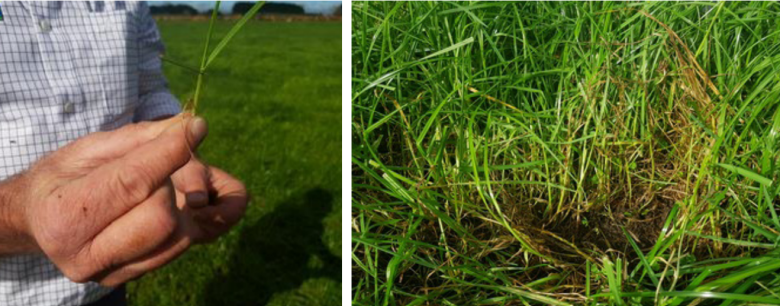
Palatability suffers when post-grazing residuals creep up. This is common in late spring. Check for high levels of basal stem and dead matter in the pasture base – animals actively avoid eating this. Dead leaves also accumulate if pre grazing covers are too long (> 3rd leaf). Reset residuals by mowing, to 4-5 cm for dairy cows and 3-4 cm for sheep; or by grazing with dry stock.
Animal preference
Given a choice, animals can develop a distinct preference for tetraploid vs diploid ryegrass pastures. In this case, focus on grazing diploids well, possibly earlier than tetraploids. High volumes of supplement also reduce pasture intake and desirability, so feeding less of this can help.
Effluent application
Animals don’t like grass freshly sprayed with effluent. Also, repeat effluent applications can raise nitrogen and potassium levels in both soil and herbage, which can both reduce palatability. One solution is to harvest silage from such paddocks to ‘export’ surplus nutrients and correct the imbalance.
Nutrient imbalance
Non-effluent paddocks can have nutrient imbalances, too. Herbage test results often reveal useful information. For example, this paddock tested below had palatability issues, even though feed quality was very good (ME = 12.5).
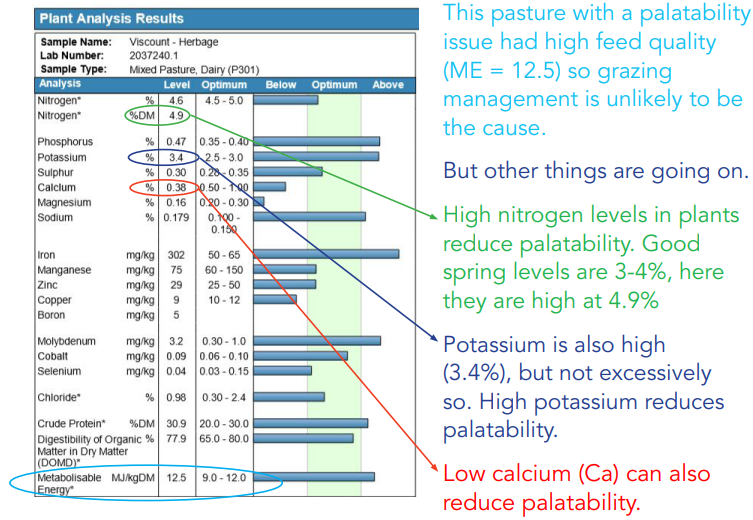
The test shows N was very high, K was high and calcium (Ca) was low – all known to reduce palatability. Graze or mow to restore residuals and maintain feed quality. Ideally make silage to ‘export’ surplus nutrients. Apply 1-2 t/ha lime to increase plant Ca uptake and decrease K levels.
Other characteristics
Seed head is a known palatability issue. Also check for disease, for example, rust in summer.
Finally, Standard endophyte (SE) pastures produce alkaloids that animals don’t like to eat in summer and early autumn.