Mixing tetraploid & diploid ryegrass
Mixing a tetraploid like 4front with a diploid perennial ryegrass like Maxsyn or Array has proved a practical way for many farmers to drive higher animal performance than traditional pasture, with easier management.
Background
Tetraploid/diploid mixes fit a range of farm systems. They are more persistent than a straight tetraploid pasture, because diploid plants help protect the tetraploid.
On many farms the tetraploid/diploid perennial ryegrass mix is now the norm, striking a near-ideal balance between pasture palatability and robustness, growing more energy per ha and being easier to manage than straight diploid ryegrass.
Tetraploid perennial ryegrass, like 4front, has excellent DM yield and year-round growth. But being so palatable, many farmers have struggled to avoid over grazing and achieve the persistence they want. Adding a denser diploid ryegrass to the mix changes the dynamics.
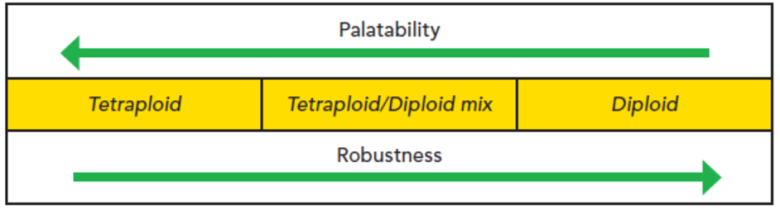
The tetraploid/diploid mix is an average of the two types, denser and more robust than a straight tetraploid, and more palatable than a straight diploid.
Palatability & stem
4front’s soft stems improve palatability and animal performance. They also hold their quality even at high covers (e.g. 3500-3600 kg DM/ha), so they’re easy to graze.
Diploid the protector
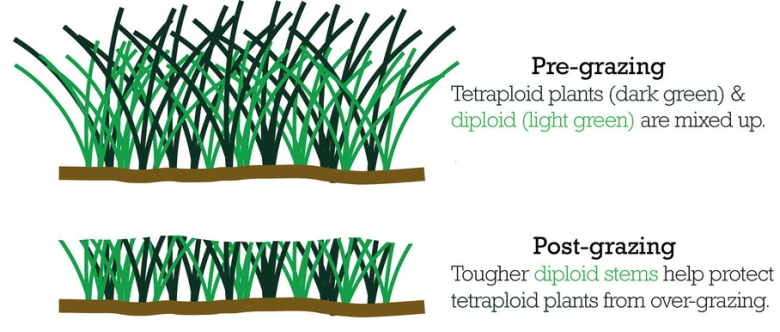
Straight tetraploid pastures are often overgrazed, reducing persistence, but in a mix they are protected by the denser, less palatable, diploid plants.
Sowing rate
We have tested different tetraploid/diploid perennial ryegrass mixes. Our advice? Sow half the normal rate of each cultivar, e.g.15 kg/ha of tetraploid 4front (half of 30 kg/ha) plus 10 kg/ha of a diploid like Maxsyn or Array (half of 20 kg/ha).