Making great silage
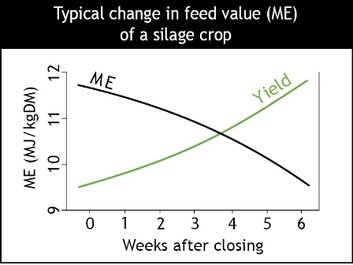
Making silage is a balance – when you close a paddock, yield increases but quality drops. For quality silage make light crops. Light crops also significantly improve pasture regrowth, density and persistence
Less is more
Lighter crops, harvested earlier, produce better quality silage. For optimal ME, cut pastures before they reach 4 t DM/ha (i.e. harvest about 1.5-2.5t DM/ ha). Paddocks cut earlier also regrow faster and are available for re-grazing earlier, handy when the weather changes and growth rates slow.
Using later heading ryegrasses can help silage ME, because those maintain better pasture quality in late spring. If possible cut paddocks in the afternoon, this is when water soluble carbohydrates (WSC) are highest in the plant to capture the most/highest ME.
Rate of quality lost
Leafy spring pasture has an ME of 12 or more. As soon as the yield exceeds 3500 kg DM/ha, quality drops. Pastures not cut before 4 t DM/ha can lose 1 ME unit every two to three weeks, as stems, seed heads and dead matter increase. (See pasture feed value for typical ME values.)
Effect of silage quality
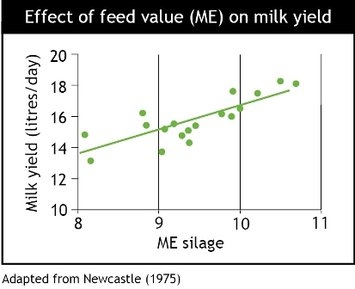
Quality may not be important for animals on a maintenance diet, but for good animal performance it’s essential. Silage quality has a direct effect on dairy cow milk production, as shown in the graphs below.
What causes poor silage?
Survey work has shown NZ silage averages approximately 10 ME, and that farmers are generally good at what happens after cutting (stacking, compacting, and covering). The main reason for so much poor silage is it is cut too late. Weather also affects quality. If made in good conditions, pasture typically loses 0-0.5 ME units through ensiling. Prolonged wilting and rain can increase this loss.
Nitrogen fertiliser
Applying nitrogen fertiliser to a paddock shut up for silage production helps increase growth rates, so the paddock can be grazed again sooner. Applying fertiliser after cutting can be useful to replace the large amounts of nitrogen and potassium removed in the silage.
Effect of silage on regrowth
Pasture regrowth after silage is strongly influenced by crop yield. Heavy crops are slow to recover, whereas light crops recover quickly. Light crops have a significant advantage if the farm goes into a feed deficit, because these paddocks are back available for grazing sooner.
Effect of silage on density & persistence
During late spring, ryegrass produces many new ‘daughter’ tillers, which are vital for growth and persistence in the coming year. They will not survive weeks of darkness under a heavy silage crop.
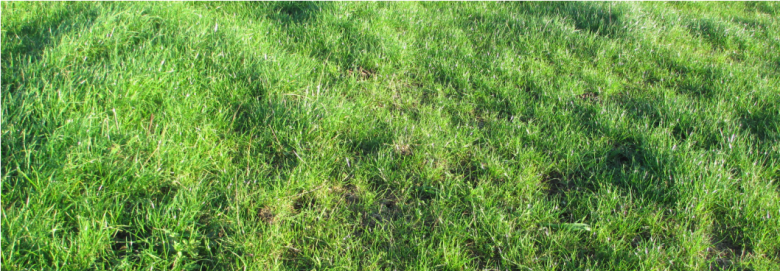
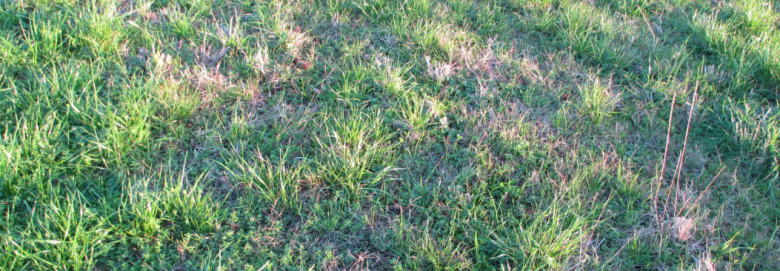
This is commonly seen after silage paddocks are allowed to become overgrown. Cut pasture is yellow and sometimes white, and pastures are thin and are slow to regrow because most daughter tillers have died. In this weakened condition they are susceptible to loss of persistence as shown below. Clover also starts to flourish in late spring and needs light the same way daughter tillers do.