
Grass diseases
This section lists a range of grass diseases, to help you identify them and their importance. Early detection and disease management are essential to maintain a healthy pasture.
Brown Blight
Brown blight (BB) is caused by the fungus Pyrenophora lolii. It is most common in spring and autumn, but damage can occur all year.
Species affected
Ryegrass, fescue, cocksfoot.
Identification
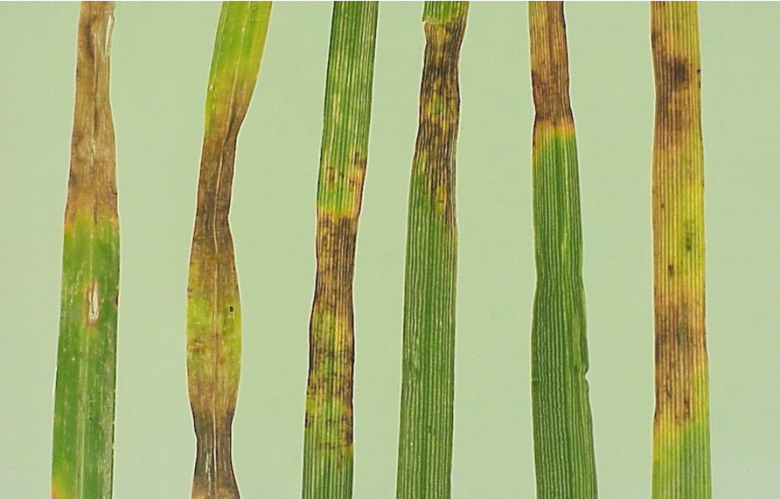
BB causes leaf lesions of various shapes. These are small, oval, brown spots, the centres of which become light brown to white as they enlarge. Longer, dark brown streaks also appear. Infected leaves turn yellow and die from the tips.
Spread
BB survives on dead and diseased plant tissue. It is spread by wind, rain, equipment or animals. In moist conditions, spores germinate, causing new infections. BB spore banks are often found in nearby undeveloped areas (fence lines and roadsides).
Prevention & management
Timely cutting and grazing minimise damage from BB.
Crown rust
Crown rust (CR) occurs throughout NZ, but is most common in the North Island. It is caused by the fungus Puccinia coronata, mainly in warm, moist conditions from early summer to late autumn. CR reduces pasture growth and palatability.
Species affected
Ryegrass, tall fescue.
Identification
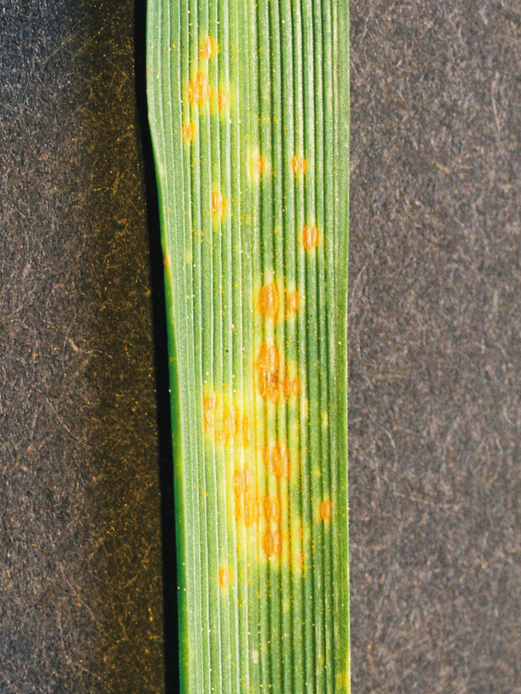
CR produces bright orange powdery spots (or pustules) on leaves of ryegrass or tall fescue plants.
Spread
Pustules produce orange spores that are carried by wind or rain to other leaves.
These germinate to produce new pustules.
Prevention & management
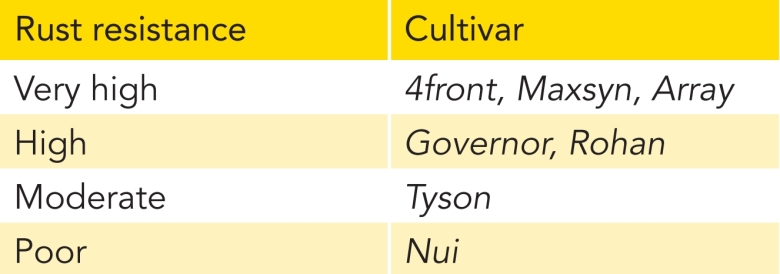
All ryegrasses will get a level of CR as leaf tissue dies off due to heat and/or moisture stress. However, more resistant cultivars will get less CR.
To avoid rust, graze pastures at the correct time; don’t let them get too long. Nitrogen fertiliser helps prevent rust. If rust is present, hard graze to remove infected pasture and apply N if possible. New growth typically has little rust.
Damping off
Damping off covers several fungi that kill establishing plants. Causal pathogens are Pythium and Fusarium spp.
Species affected
Ryegrass, clover.
Identification
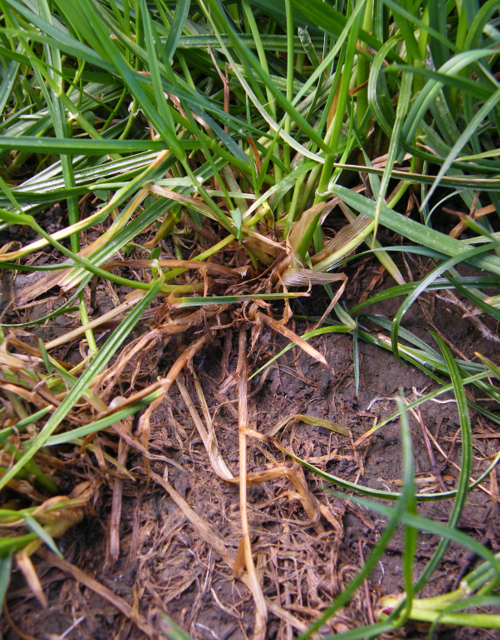
Young plants wilt and die from lesions at and below soil level.
Spread
Infection is common in autumn and winter particularly during cold wet weather.
Fungal spores are widespread in the soil and can become very active when climatic conditions are suitable.
Prevention & management
All the fungi are soil-borne and spores can build up over successive years. Agricote Grass seed treatment provides early control.
Ergot
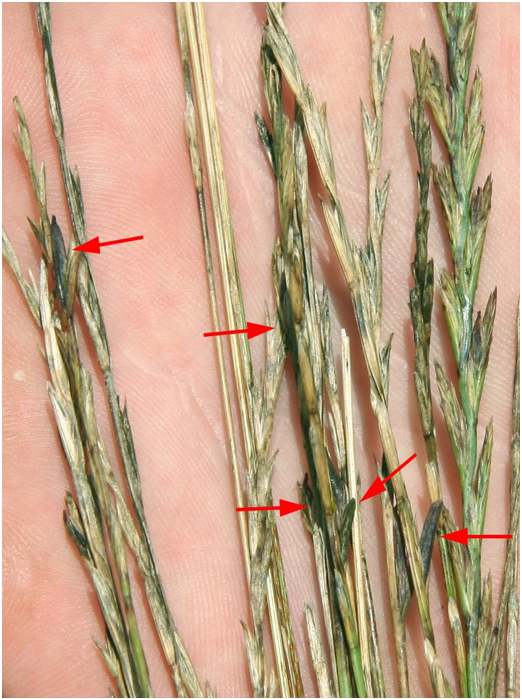
Ergot is caused by fungal species in the Claviceps genus. Claviceps purpurea is the most well-known. It occurs in summer when ergots (or sclerotia) develop on grass seed heads. It can reduce yield and produces compounds that are toxic to stock.
Species affected
Many grasses, including ryegrass, paspalum, cereals and brome species.
Identification
Ergots are dark purplish-black, replacing a seed in the seed head. They are usually hard and larger than normal seed.
Spread
Ergots drop to the ground and lie dormant through winter. In spring they germinate to produce a fruiting body which releases spores which infect developing florets. It is also spread in infested hay.
Prevention & management
The goal when seedheads have ergot is to prevent animals eating these.
A good solution is to mow the pasture and leave seedheads on the ground for several weeks, so animals won’t eat them at the next grazing.
If there is a reasonable amount of green leaf in the pasture, pastures can be carefully grazed with sheep. Sheep are selective grazers and avoid eating seedheads (unlike cattle which graze from the top down). Break the paddock into blocks and monitor sheep as they graze. Let them eat the green leaf but shift them before they eat the seedhead. Remove them immediately if they show any symptoms of ergot toxicity.
Don’t make hay or silage from pastures with ergot. It will still be present when you feed it out and can cause health issues particularly if used as a maintenance feed.
Ergot in seedheads can remain toxic for months if no action is taken. Seedheads gradually fall and disappear. When this happens, the risk is over.
Net blotch
Net blotch (NB) is common throughout NZ, caused by the fungus Pyrenophora dictyoides, usually in autumn. It can seriously affect winter pastures.
Species affected
Perennial ryegrass, tall fescue.
Identification
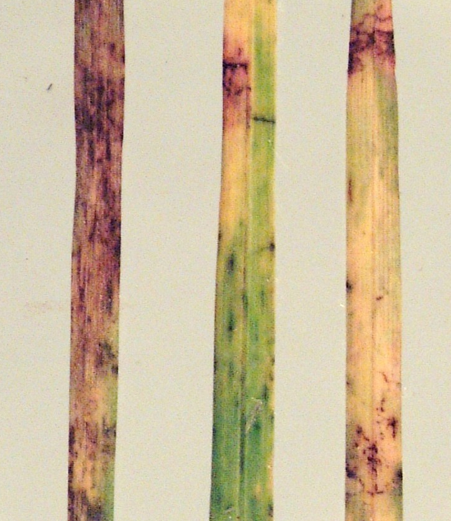
NB produces a network of short dark brown bars which run across the leaf blades. These enlarge and become dark brown, solid spots. In heavily infected plants, leaf tips yellow and die back. NB is more severe in long dense swards in moist conditions.
Spread
NB is spread as wind-borne spores produced by lesions. The fungus survives on infected stubble. Wet, humid weather favours NB spread.
Prevention & management
Graze pasture before it becomes long and rank to reduce the chance of NB and lower severity of the disease. Apply N based fertiliser after grazing to boost regrowth and reduce the incidence of NB. Under severe infection, fungicides may be economical.
Making silage will not remove NB; Instead, it will make the silage less palatable.
Powdery mildew
Powdery mildew (PM) is caused by the fungus Blumeria graminis. It usually occurs in spring and autumn. It is normally a minor disease in NZ, only causing significant yield reductions under heavy infection.
Species affected
Perennial ryegrass, tall fescue, cocksfoot.
Identification
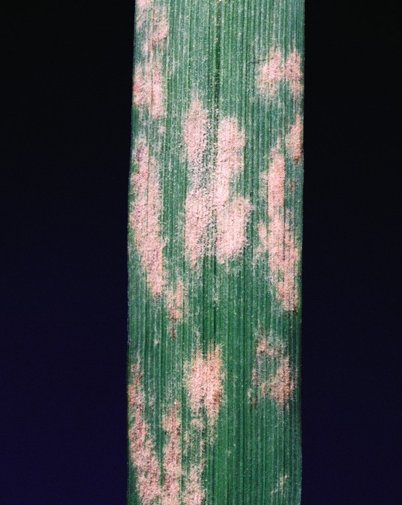
PM causes patches of fine, white-coloured fungus (mycelium) on leaves and leaf sheaths. Older leaves are infected before younger leaves and can yellow and die under heavy infection.
Spread
PM survives winter as fungal mycelium or cleistothecia on infected plants, stubble or hay. Air-borne spores produced in spring land on susceptible plants, causing new infections. Spores are also released after rain in autumn.
Infection is worst in shaded areas with poor air circulation.
Prevention & management
Graze pasture to remove affected growth and promote fresh regrowth. Do not allow pasture to become overgrown.
Ramularia leaf spot
The fungus Ramularia pusilla causes Ramularia leaf spot (RLS), most commonly in spring and autumn, when it can seriously reduce yield and quality.
Species affected
Ryegrass, prairie grass.
Identification
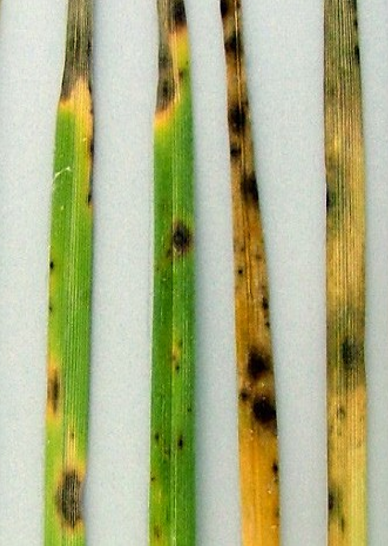
Rounded leaf spots, grey to brown in colour, sometimes with red edges, appear on the leaf surface. Part of a paddock can appear yellow as leaves become infected and die.
Spread
Numerous microscopic egg-shaped spores are produced on older lesions. These spores are readily wind borne and can rapidly spread infection to new sites. Wet humid weather helps spread RLS.
Prevention & management
Pasture should be grazed before becoming long and rank. This cuts the risk of RLS becoming established and reduces the severity of the disease. Under serious infection, fungicides may be economical.
Scald
Scald, caused by the fungal species of the Rhynchosporium genus, typically occurs between April and October, from Manawatu and Hawke’s Bay south.
Species affected
Ryegrass, cocksfoot.
Identification
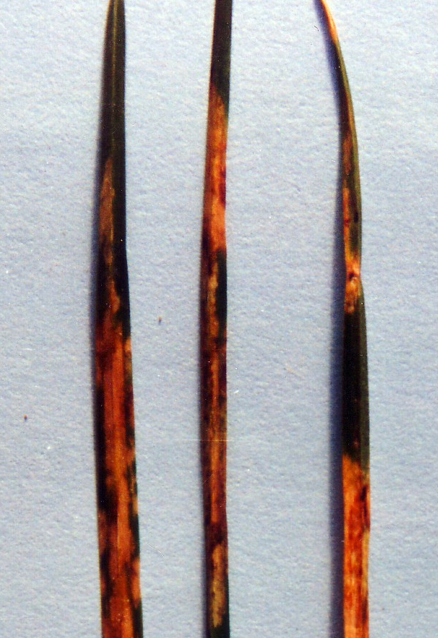
Scald causes irregularly shaped lesions or scald- like blotches on leaves and leaf sheaths. These often appear grey with brown edges. Lesions can join to affect most of the leaf. Infected leaves often die from the tip down; heavily infected plants are unpalatable to animals.
Spread
Spores produced on dead leaves are splashed, blown or carried to new leaves. The disease then persists in cool, sheltered areas. It is most severe during cool, wet periods in early spring and autumn.
Prevention & management
Sow resistant ryegrass cultivars. All Barenbrug cultivars have good resistance to scald. If the disease is noted in winter conserved feed, timely grazing can reduce losses.
Snow mould
Snow mould is caused by the fungus Microdochium nivale and can sporadically cause serious disease.
It can be a problem in establishing autumn sown pasture following cereals. Long, rank pasture swards can also become infected in winter, especially under snow.
Species affected
Ryegrass, brome grasses.
Identification
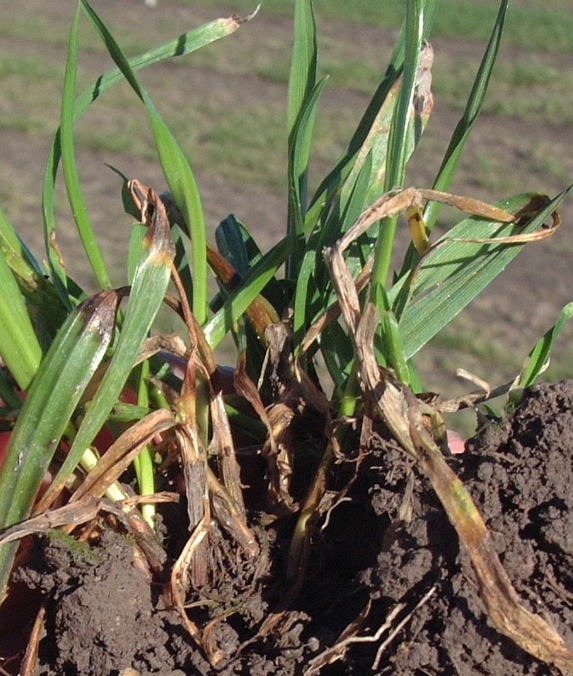
Plants begin to die from infection in the crown. Leaves display large, dark lesions that quickly kill the whole blade. Infected tissue produces masses of spores. The fungus can survive in soil and on debris, especially that of infected cereals, for many months.
Prevention & management
Don’t let pasture become long and rank in winter. Do not drill autumn sown pasture in paddocks where snow mould is known to have infected cereal crops.
Stem rust
Stem rust (SR) occurs throughout NZ, caused by the fungus Puccinia graminis, mainly in warm, dry conditions in summer and autumn.
Species affected
Ryegrass, tall fescue.
Identification
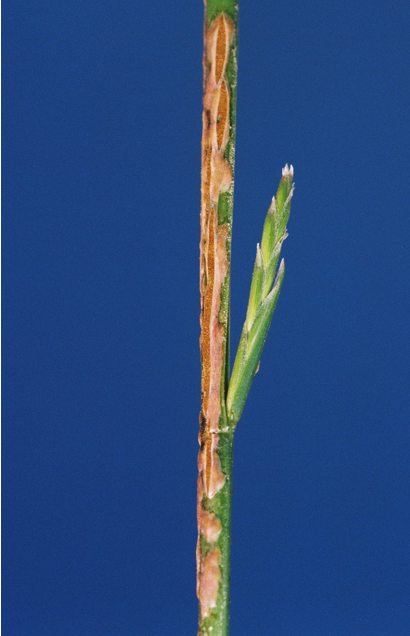
SR produces brick-red powdery spots (or pustules) on leaves and stems. These are often fringed by papery remnants of leaf epidermis.
Spread
Pustules produce reddish brown to orange spores that are carried by wind or rain to other plants. These germinate to produce new pustules.
Prevention & management
Use resistant ryegrass where SR occurs. To avoid SR, graze pastures at the correct time; don't let them get too long. Nitrogen fertiliser may help prevent SR.
If rust is present, hard graze to remove infected pasture and apply nitrogen if possible. New growth should show little rust.
Barenbrug wishes to acknowledge the help of Ian Harvey, Plant Diagnostics and Plant & Food Research in producing this section.