
Brassica grazing management
Brassicas require careful grazing management, particularly when being introduced to stock. Most animal health issues happen in the first few days of feeding.
Introducing animals
Animals coming from other feed need time to transition to brassicas, so introduce them slowly from an initial 1-2 hours a day up to their maximum allowance over 7-10 days. This helps prevent scouring, acidosis and nitrate poisoning. During transition, put animals on to the crop when reasonably full, to slow their intake.
Brassicas should not exceed 70-80% of total daily intake (30% for lactating dairy cows). Where brassicas compromise most of the daily intake, fibre (e.g. hay, straw, silage) must be supplied to help maintain rumen function. It is best to feed this before putting animals on the crop.
Match supplement to the crop being fed to ensure animals receive their complete nutritional requirements.
Trace elements such as copper, selenium, iodine and magnesium may be required; check with your vet. Offer plenty of clean water.
Crop utilisation
Brassica utilisation varies widely, depending on soil type, weather, brassica type, cultivar and animal performance goals. For high weight gains, lower utilisation must be accepted. For example, utilisation of kale might be 85% for maintenance, but needs to be <75% to increase body condition score.
Crop allocation
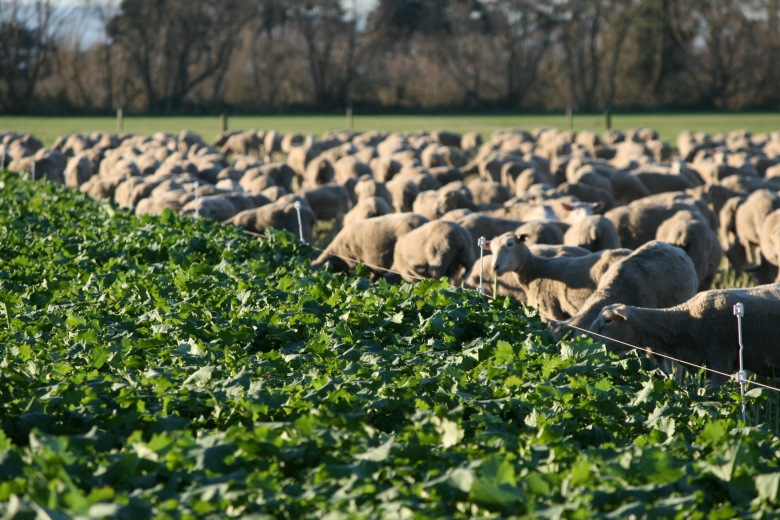
Break feeding is best, giving more control of animal intake, utilisation, regrowth and how long the crop will last. Long narrow breaks result in less trampling and wastage, and higher utilisation. Set targets for animal performance to calculate appropriate feeding levels, e.g. +0.5 body condition score (BCS) in cows over 6 weeks; or ewe lamb growth of 250 g/day.
Setting the exact break size is critical. See Calculating break size
Monitor grazing, as animals are the final judge of DM yield, break size and crop utilisation.
Pre-calving transition
Feeding pregnant animals brassicas too close to giving birth can lead to metabolic problems. Aim to transition animals back to a grass-based diet at least two weeks before calving.
Monitor animals
Animals and utilisation should be regularly monitored while grazing brassica crops to check they are meeting condition/liveweight targets. For example, for dairy cows in winter, the target for calving is a body condition score (BSC) of 5 for mixed age cows, and 5.5 BCS for first and second calvers. For finishing lambs in summer, growth is maximised where lambs are offered 2-2.5 kg DM/day and consume about 65% of the crop.
If animal performance targets are not being met, they may need higher daily allowances. Monitor feeding levels to make sure animals are receiving enough. Check the amount of feed still available in the afternoon, after morning break shifts.
Some animals, no matter how much brassica they are offered, simply do not do well on these crops. These animals should be removed and put back onto pasture.
Plan ahead
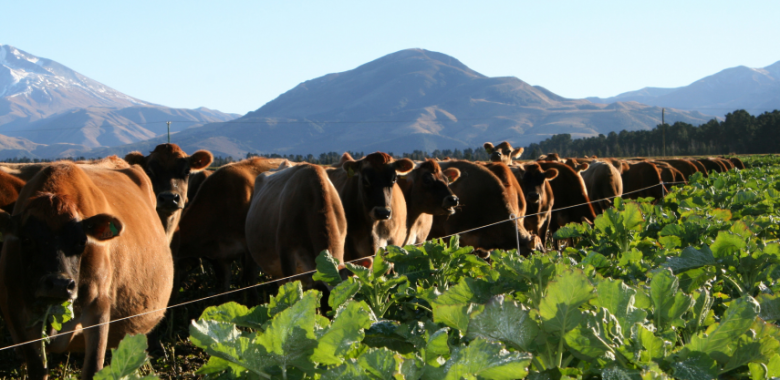
Winter grazing practices are changing in New Zealand, for both environmental and animal welfare reasons. Before sowing, check paddock contour, size, slope, critical source areas (CSAs), soil type, stock access, water access, grazing pattern and nutrient loss buffer zones.
For more detail on best practice winter grazing, visit www.dairynz.co.nz , wwwbeefandlamb.co.nz or local council websites.