
Bespoke data is closer than you think
It’s been less than four years since a revolutionary digital technology first became available for anyone to use.
Now, you can barely avoid it. Generative AI seems everywhere, all at once. No matter what you think of it, this genie is out of the bottle!
There’s a lot of noise and hype about AI tools, but we wanted to know how they might actually help us farm better.
So for this Insight, we spoke with three people at the sharp end of latest developments.
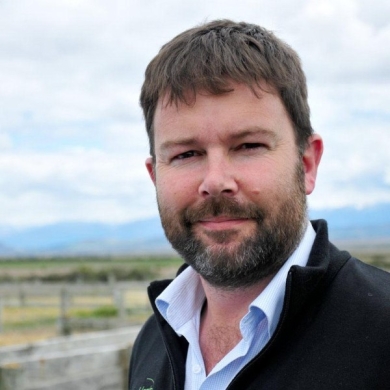
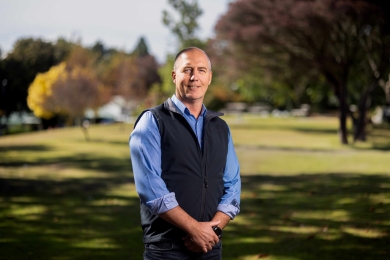
Aaron Meikle, Beef + Lamb New Zealand head of extension – product and innovation; Steve Harcourt, science group manager for digital agriculture at the Bioeconomy Science Institute (formerly AgResearch), and our own global science manager Dr Luke Pembleton each offer a hands-on perspective.
Let’s jump in …
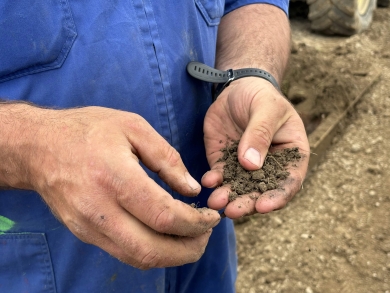
It’s personal
If you’ve heard it once, you’ve heard it scores of times – no NZ farm (or farmer) is the same. Layers upon layers of variability and nuance are baked into each system, from the personal to the physical.
In such an individualistic industry, both Aaron Meikle and Steve Harcourt are genuinely excited about AI’s ability to customise, either up front or in the background.
That’s because many of the things that make your farm uniquely yours, from personal hopes to hard data, can now be woven into a range of bespoke tools and resources much more readily than ever before.
Two big benefits accrue – better decision making, and more autonomy. Generative AI doesn’t just deeply personalise farm advice, it does so under your direction.
Ready to work
At six months old, heading dog Bella is still just a pup. But already, B+LNZ’s farmer-facing generative AI is helping farmers in cool ways her makers never expected.
Early adopters, for example, are using Bella to write Farm Environment Plans, staff checklists and animal welfare plans that meet audit standards.
Aaron Meikle is stoked about this. A key goal in building the completely closed, trusted knowledge base of B+LNZ resources that Bella accesses was to give farmers more control over how they apply all this information to their own circumstances.
“That’s where we see these tools fitting in. It’s not about the technology itself, but putting the power in the hands of others, rather than just us. Bella doesn’t locate, she creates, based on your individual needs.”
Model outcome
Steve Harcourt says AI’s ability to customise what historically has been generic data will equally benefit decision-support tools already used on farm.
Highly complex system models like those that underpin applications like FARMAX can now be improved much more efficiently using AI to analyse massive sets of data.
Greater scientific depth and detail can also be folded into such tools without changing how you interact with them.
“Our previous approaches in connecting research to farms have – by necessity - largely been reductive, in that we try and isolate key effects and relationships and standardise trends or standardise data, to keep it manageable. But there are countless nuances in every farm system.
“AI will enable interfaces where it’s just as easy to follow best practice while accounting for those farm specific nuances, so we can really optimise our systems in ways we haven’t been able to before.”

Augmentation, not replacement
If it isn’t already, Steve and Aaron say, AI technology will soon be embedded in most tools and services you use on farm every day, whether you realise it or not.
But generative AI in particular is no substitute for your own experience, knowledge and judgement, nor does it supplant advisors you have trusted for years.
“It doesn’t do the thinking for you! It’s only as good as what you put into it, and how you train it,” Steve says. “It’s a logical machine, not a human, best thought of as a very matter of fact friend who wants to please you, and will respond exactly how you instruct it to.”
Just as search engines and the internet didn’t stop farmers seeking advice from neighbours, reps, vets or other rural professionals, Aaron adds, neither will AI, especially in terms of social interaction.

Greener pastures
While generative AI tools are helping farmers make better decisions on farm, plant breeding typically applies a different sub-field of AI – machine learning and optimisation algorithms, and we are actively exploring these.
Barenbrug global science manager Dr Luke Pembleton says two prospects stand out – incorporating machine learning into existing models that predict plant performance, and using AI to identify genetic combinations most likely to deliver the desired result.
What might these mean for you? “Increased genetic gain, better performing varieties, and a shorter development process,” he says.
“These technologies offer the opportunity to incorporate more traits that have previously been difficult and expensive to measure, like persistence, disease tolerance and nutritive value, into our breeding programme, and to combine them faster and with greater accuracy.”
In an increasingly unpredictable climate, such advances matter today more than ever: “We need to help farmers meet this challenge.”
Back to basics
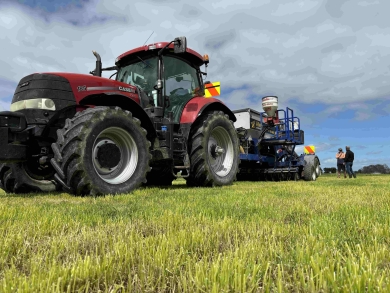
We’re not shy about innovative technology, but we also know nothing beats boots-on-the-ground observation when it comes to your pastures — especially at this time of year.
The better your pasture base, the more you’ll get out of any new tool, including AI.
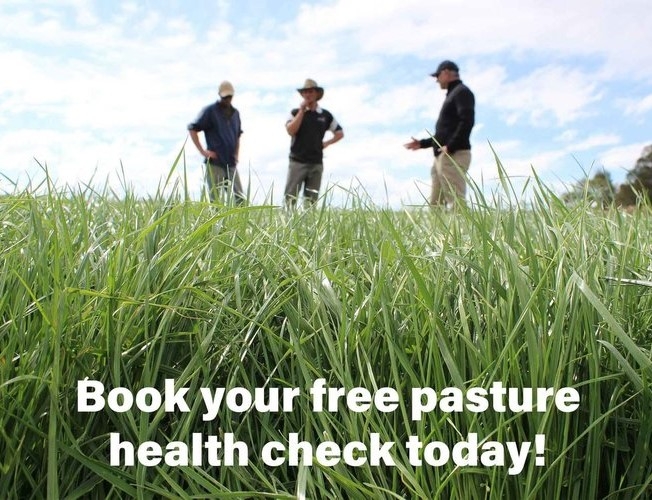
Book your free personal Pasture Health Check online today and let’s make sure your pastures are performing at their best.
Book a free pasture health check
Click here to request a free on farm pasture health check with one of our local experts.