
And from there, transform your farm
There’s an old saying that the biggest room in the world is the room for improvement.
Dating back over 150 years, it reminds us we can always do things better.
Since 2012, one New Zealand farm business has put this philosophy at the heart of everything it does, and has quietly excelled as a result.
Grass fed, consumer led, ethical and highly successful, it shows just how powerful NZ farm systems can be when driven by a culture of continuous improvement.
It also models one all-inclusive pathway to the future of pastoral NZ dairy as a whole. What might we learn from this approach, particularly in terms of pasture?
The big picture
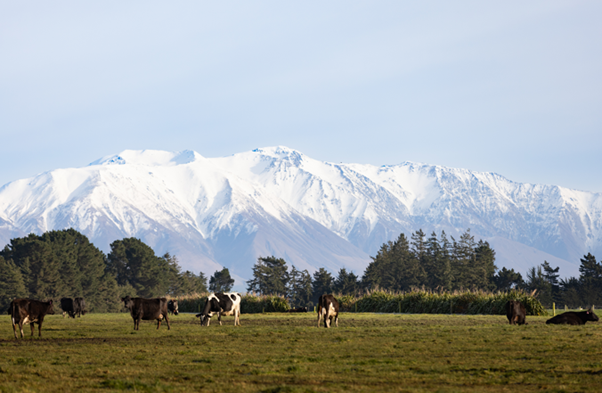
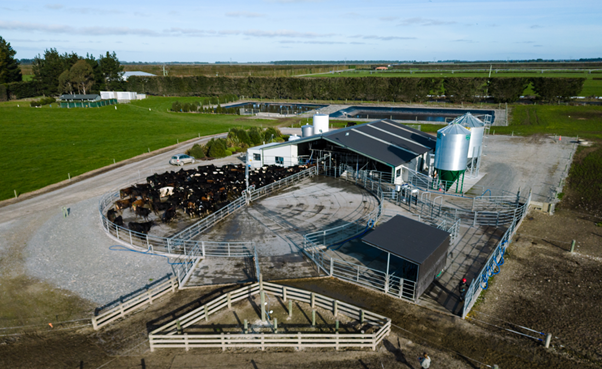
Southern Pastures is a group of 19 farms in Canterbury and Waikato that milks 15,000 spring-calving cows, employs dozens of people and produces millions of litres a milk a year.
But this story is not about big numbers.
What matters here is how the group manages cows, people, land, grass, and water to meet its own formidable, industry-leading goals.
Southern Pastures produces milk under its own 10 Star Certified Values standard, which covers grass-fed, free-range, climate-change mitigation, human welfare, animal welfare, and sustainability requirements. It refuses, for example, to feed cows imported palm kernel expeller as its production directly contributes to loss of virgin rainforest and global biodiversity.
There’s a lot to unpack in those values, more than we could ever do justice to in this context. So instead let’s concentrate on key aspects of the group’s pasture policy.
‘A very NZ story’
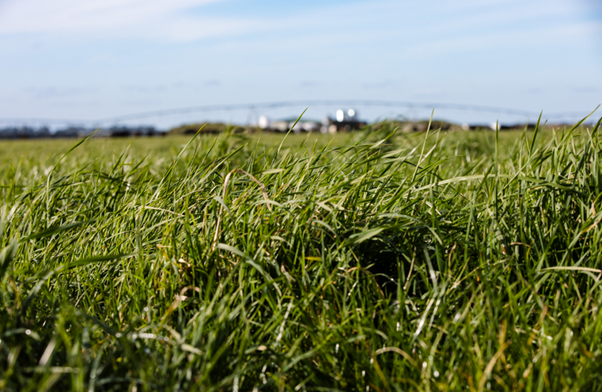
From day one, grass has been central to the group’s consumer-focussed, healthy dairy food ethos.
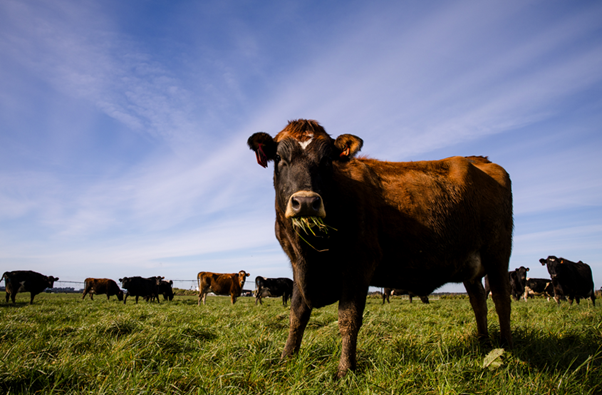
Grass fed in Southern Pastures’ terms doesn’t mean grass only, but it does mean grass first, explains Canterbury General Manager James Booker.
To retain its grass fed certification, which is independently audited by AsureQuality, the whole group farms to certain criteria - 96% of the diet fed to cows is grass or forage, of which 70% includes homegrown pasture, crops and silage, topped up with imported grass, lucerne and maize silage.
Grain fills the remaining 4% gap, if needed.
“There’s a very NZ story here about our strategic advantage in low cost dairy production, especially with irrigation in Canterbury,” James says. “It combines the strength and reliability of pasture performance under good management; reliable water; the right nutrients at the right time to meet agronomic needs, and a long term view to pasture renovation.”
Aggressive renewal
Standard policy is annual renewal of 8-10% of every Southern Pastures dairy platform; the group has occasionally targeted as much as 17-20% of a platform in specific cases, where pasture performance has fallen off.
“Renewal has always been seen as an important investment, particularly with the changing landscape of nitrogen use in the past decade,” James says.
“A lot of poor performing pastures across the industry were historically masked by higher nitrogen rates. The introduction of nitrogen caps was revelatory in that regard.”
That said, there’s no renewal without good reason. Strong growthy pastures aren’t targeted, no matter how old they are; paddocks are selected for re-sowing purely on performance, including farm walk data and number of grazings.
The right mix
Over half the group’s pastures are a mix of tetraploid and diploid ryegrass, most recently 4front and Maxsyn, with white clovers. Again, this is long-standing practice, going back several years in collaboration with Barenbrug.
Combining the two ploidies means the group’s farmers can graze these pastures at slightly higher residuals, and run longer grazing rounds, to maximise dry matter growth, quality and utilisation.
The goal? “Having our cows repeatedly hit the right grazing residuals, and achieve good per cow performance.”
It’s also a relatively simple strategy that succeeds across multiple properties operating under a shared set of parameters.
“We run a business at scale, with strong, experienced and dedicated farmers. No-one here is so meticulous that they want complexity, so we don’t have a huge amount of bespoke pasture strategies,” James says.
Hands on
Day to day pasture monitoring and management sits with each of the group’s individual farmers, and for now remains a hands-on affair.
Satellite-backed monitoring technology may change this in future; so far no such system has done better than the people who are actually on the farms and who are trusted to make the right decisions at the right time.
Protecting grass and soil throughout the season is a priority.
When weather-related damage is unavoidable, repairs are prompt. Up to 7% of existing pastures are undersown with new seed each year.
Basics done well
None of these policies is unique or special, as James is quick to point out – in generating tonnes of high quality pasture for thousands of cows, year after year, Southern Pastures is following industry best practice.
Across all aspects of its operation, the group’s attention to detail and a constant focus on improvement show just how strongly pasture-based NZ farm systems can perform when the basics are done consistently well.
Tellingly, among all the big numbers associated with Southern Pastures, there’s one in particular it is deservedly proud of this season – a 6 week in calf rate of 76% across the whole group.
James says there is still room for improvement here, but as with the group’s other efforts, steady incremental progress is key.
While Southern Pastures farming practices will continue to evolve, the principles for maximising a pasture-based asset will remain the timeless constant.
Here to help
If you’d like to advance your pasture and forage goals this season, we’re here to help. Book your free Pasture Health Check today.
Book a free pasture health check
Click here to request a free on farm pasture health check with one of our local experts.