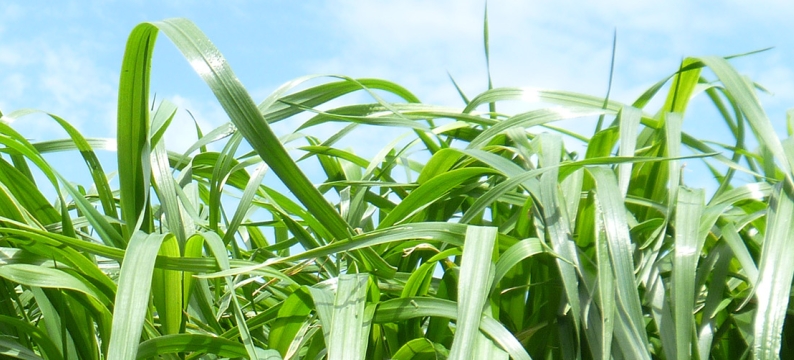
Hattrick Green Feed
A rust-resistant, high-yielding winter oat with good regrowth, 80% digestibility, and 13–15% protein.
-
Easy to manage winter crop
-
Leafy, high yielding
-
Sown with ryegrass gives you more bang for buck
Hattrick is an easy to manage winter crop. It is most often sown mixed with Tabu+ Italian or Hogan annual ryegrass, to extend growth into spring.
Help it thrive
Hattrick is leafy, high yielding, and more adapted to multiple grazings than some other oat cultivars. It can usually be grazed 2-3 times depending on management. For best regrowth graze at 30 cm height, leaving a 7-10 cm residual. Growth can be boosted by strategic use of nitrogen fertiliser, for example applying 30 kg N/ha after grazing.
Feed value
Leafy Hattrick oats have 80% digestibility (12 MJ ME/kg DM) and contain 13-15% protein. Harrick can be sown with Laser Persian clover to further improve spring feed value
Growth curve
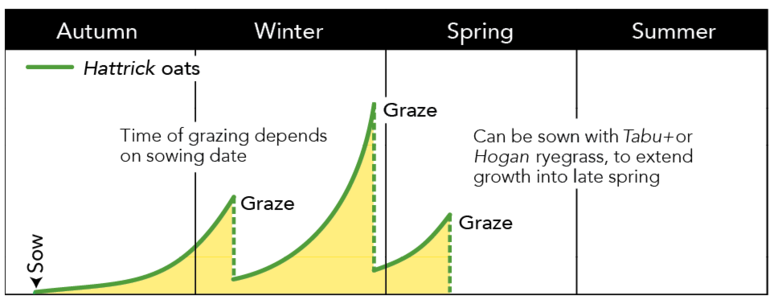
Sow early
For maximum winter yield, sow Hattrick early (February/March). Protect from Argentine stem weevil with insecticide if needed.
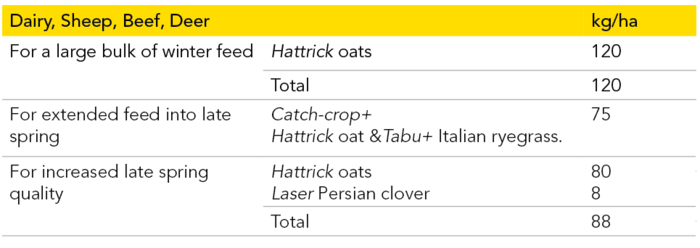
Hattrick oats can be sown alone, but are most commonly sown with Italian or annual (e.g. Tabu+ or Hogan). Mixing Hattrick with ryegrass gives you more bang for buck – better feed value, more growth through spring.
Environmental benefits
Sowing oats in late autumn (after feeding a crop) lightens your farm footprint. Soil nitrogen is taken up by the oats rather than being potentially lost via leaching. For best results, don’t wait until a whole paddock has been grazed, but sow oats as soon as half the crop has been fed. Early sown oats grow faster and take up more nitrogen.
Sowing Hattrick
Hattrick green feed oats are marketed by Barenbrug

Hattrick Green Feed